The Land Art Festival is a long-standing event that took place in Grindelwald from 1999 to 2018. Since 2023, the event has been organized by Grindelwald Tourism.
Installations 2025
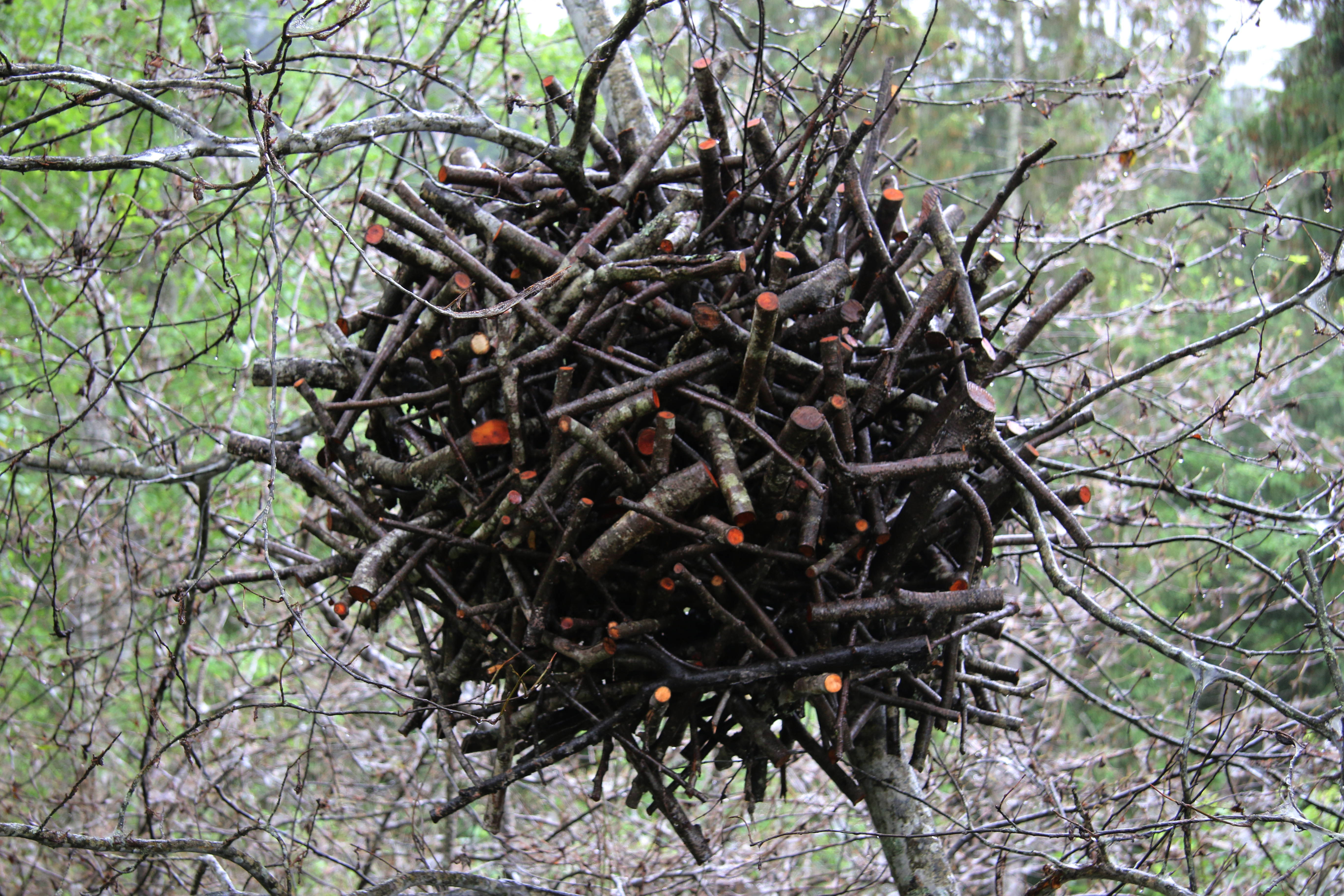
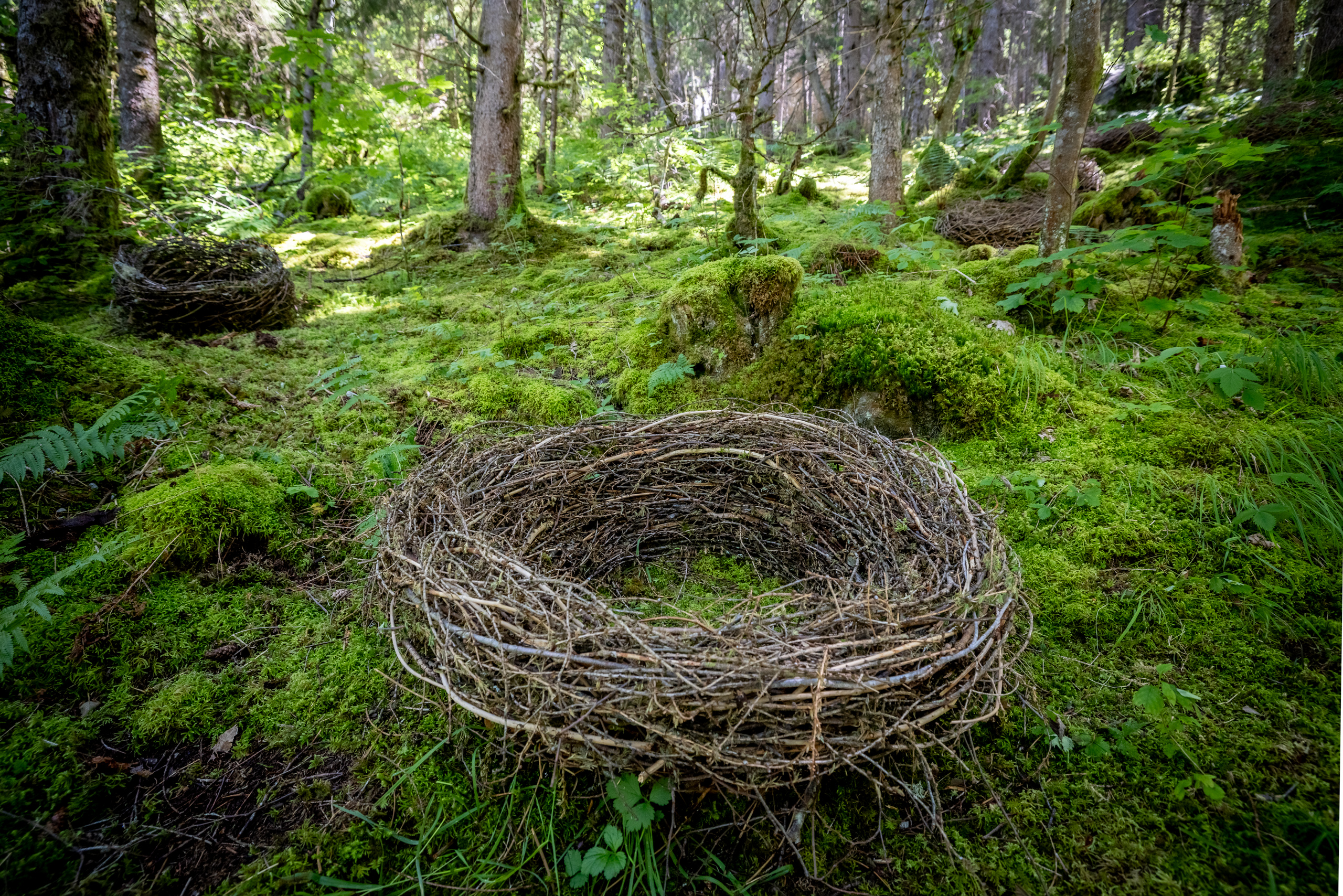
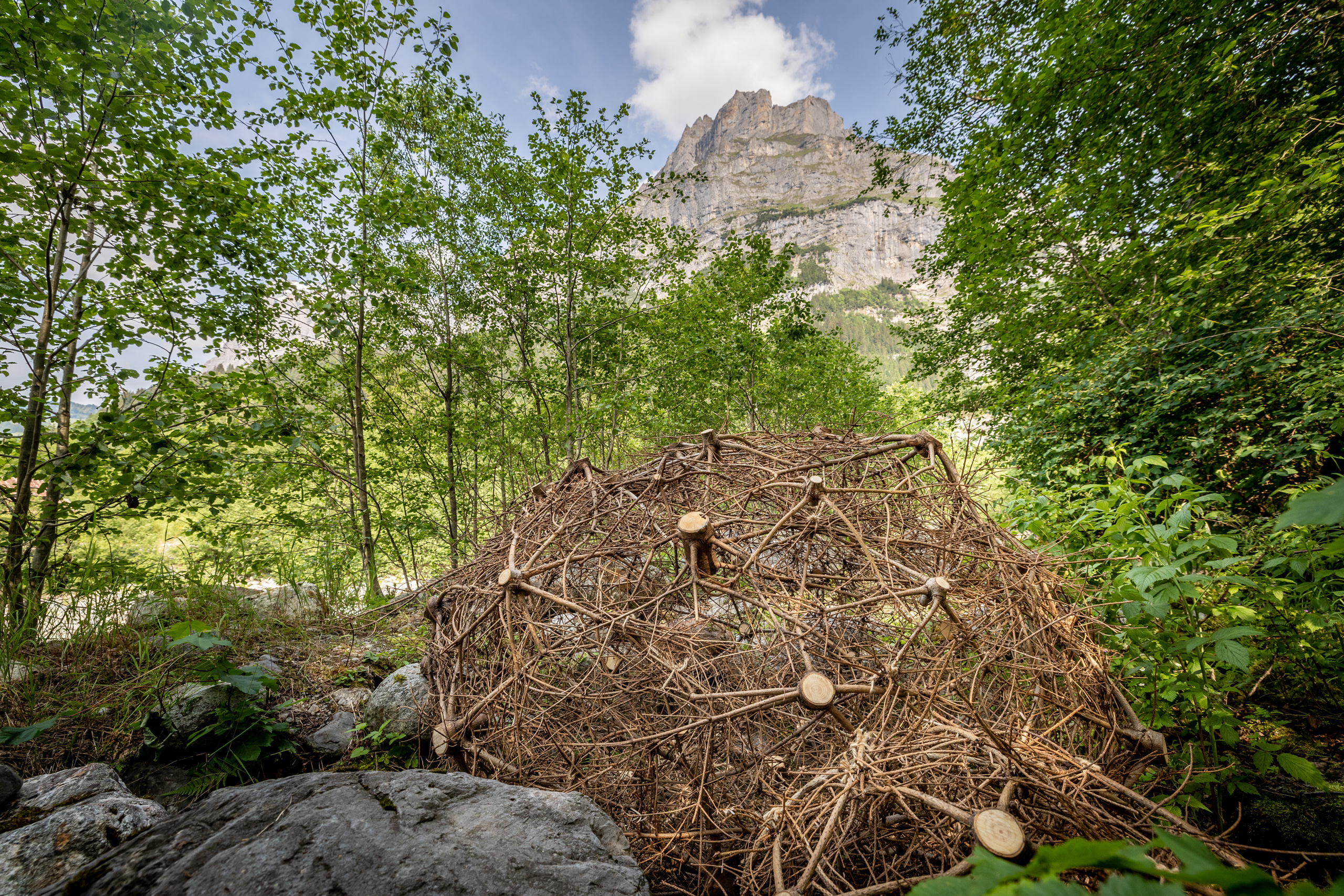
The peaceful atmosphere of this special place in the forest with its soft moss cover and beautiful ferns inspired us to create a nest installation. In the nest you feel safe, protected, you find a home, you find peace. In our work, we make a point of using only the materials we find on site and leaving nature as untouched as possible. After completion, we return our work to the cycle of nature.
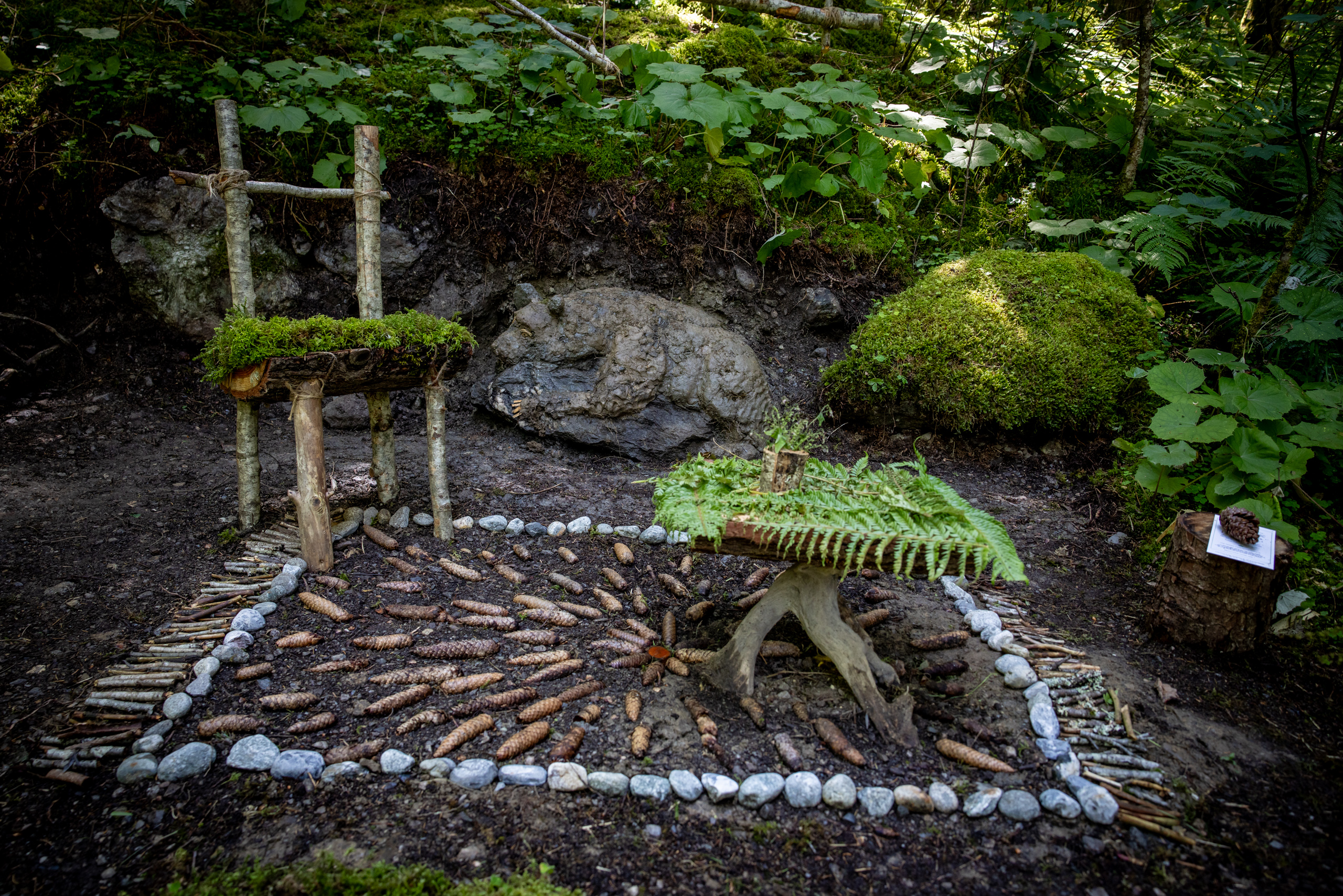
With this Land Art concept, we have staged a hotel room - designed from and in the midst of nature. A framed scene invites us to pause and experience the connection between the inside and outside world. The armchair, playfully shaped from wood and lined with soft moss, invites us to linger. The tablecloth is woven from ferns, delicate and lively. A curved branch lamp carries a pitted orange as a light source - a light taken directly from nature. In the background, we discover a curled-up Swiss bear, as if it were a visitor from outside - curious and peaceful. Here we explore the question of how much we take from nature to create our inner living spaces - things that are man-made but inspired by the natural world. This shows how the outside merges with the inside. We have created a living room - with a very special view. With special thanks to the Hotel Kreuz & Post for its support and inspiration.
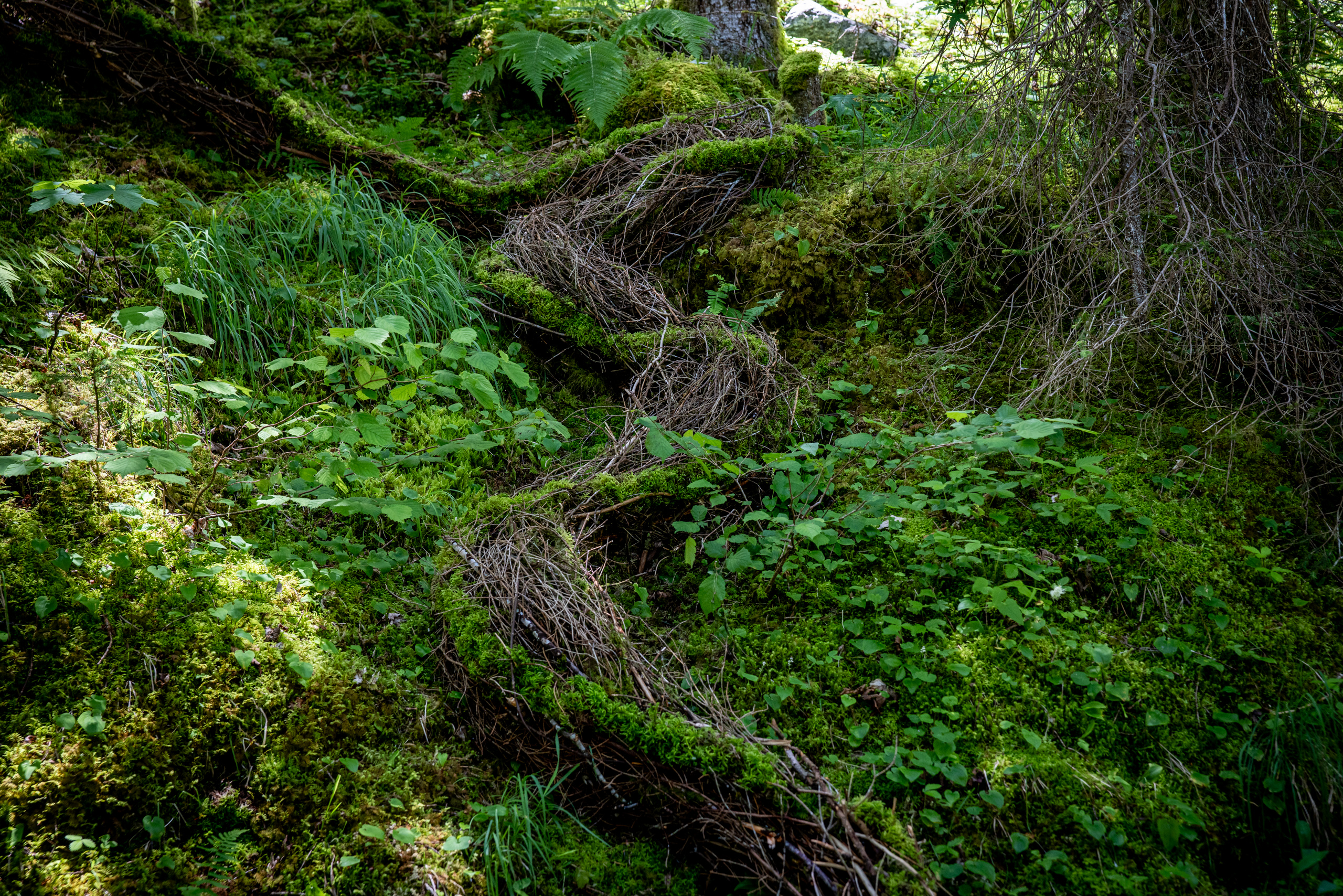
Just as a river seeks its own path, we all seek and follow our own path in life: hesitant and slow, fast, sweeping and winding, straight ahead and with detours, downhill and uphill, boring and varied. Each person in their own flow.
Life is not always in balance.
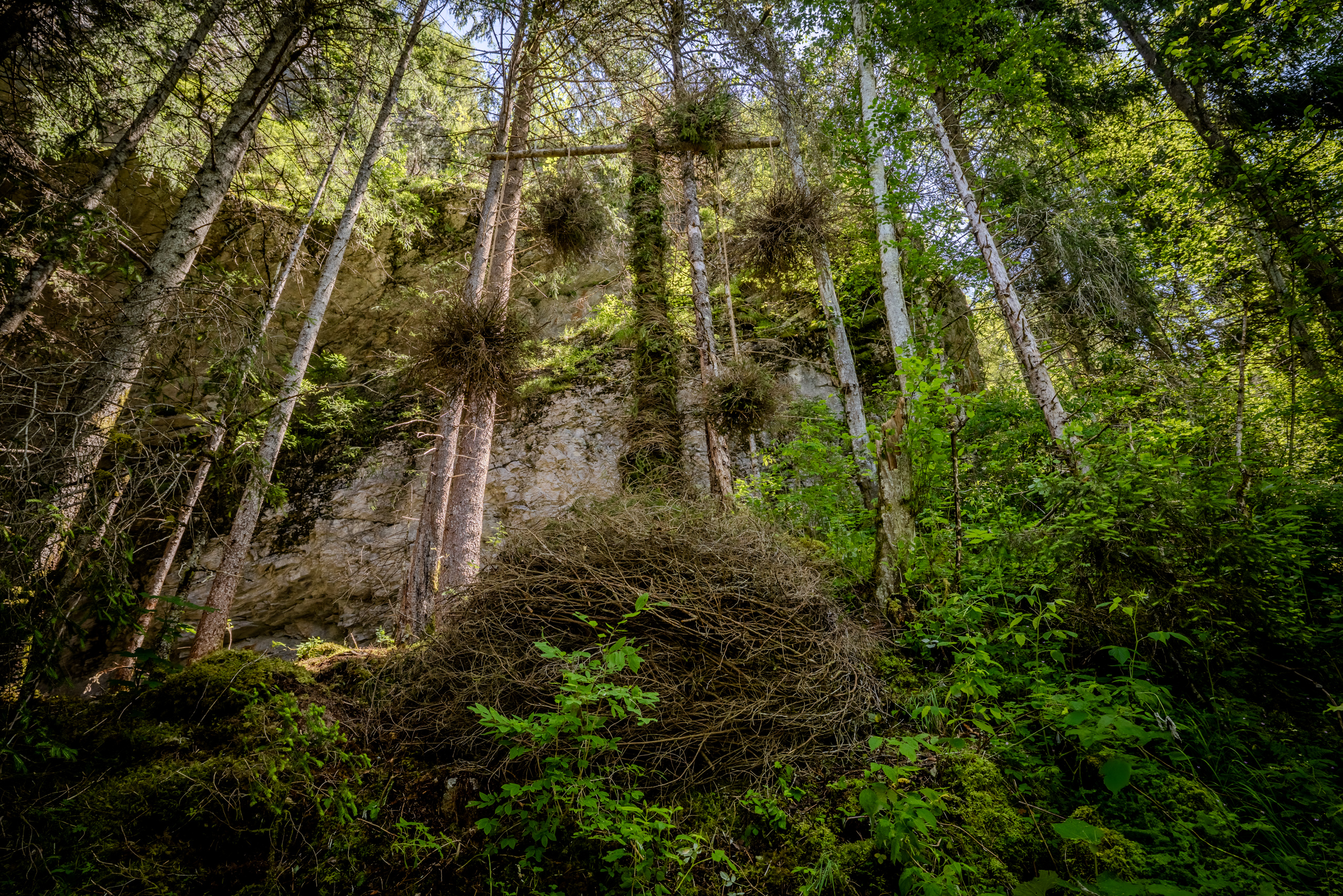
Geometric construction, rational-logical thinking.
A metaphor for an evolving idea - an existential path. The idea grows and moves in space: in vertical and horizontal lines, in binary codes - an expression of a dualistic, human thought process.
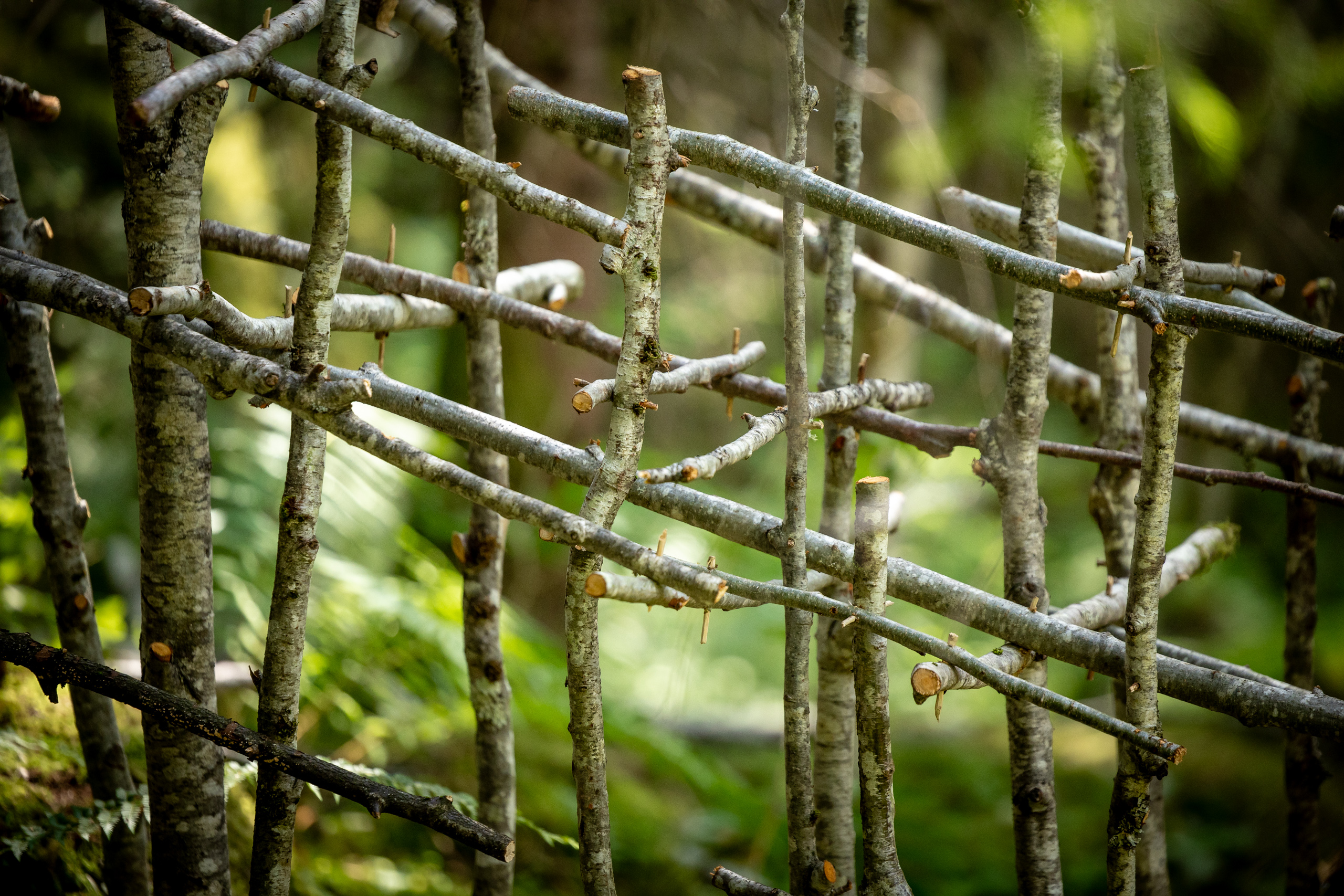
The location alone determined the topic and form of this work.
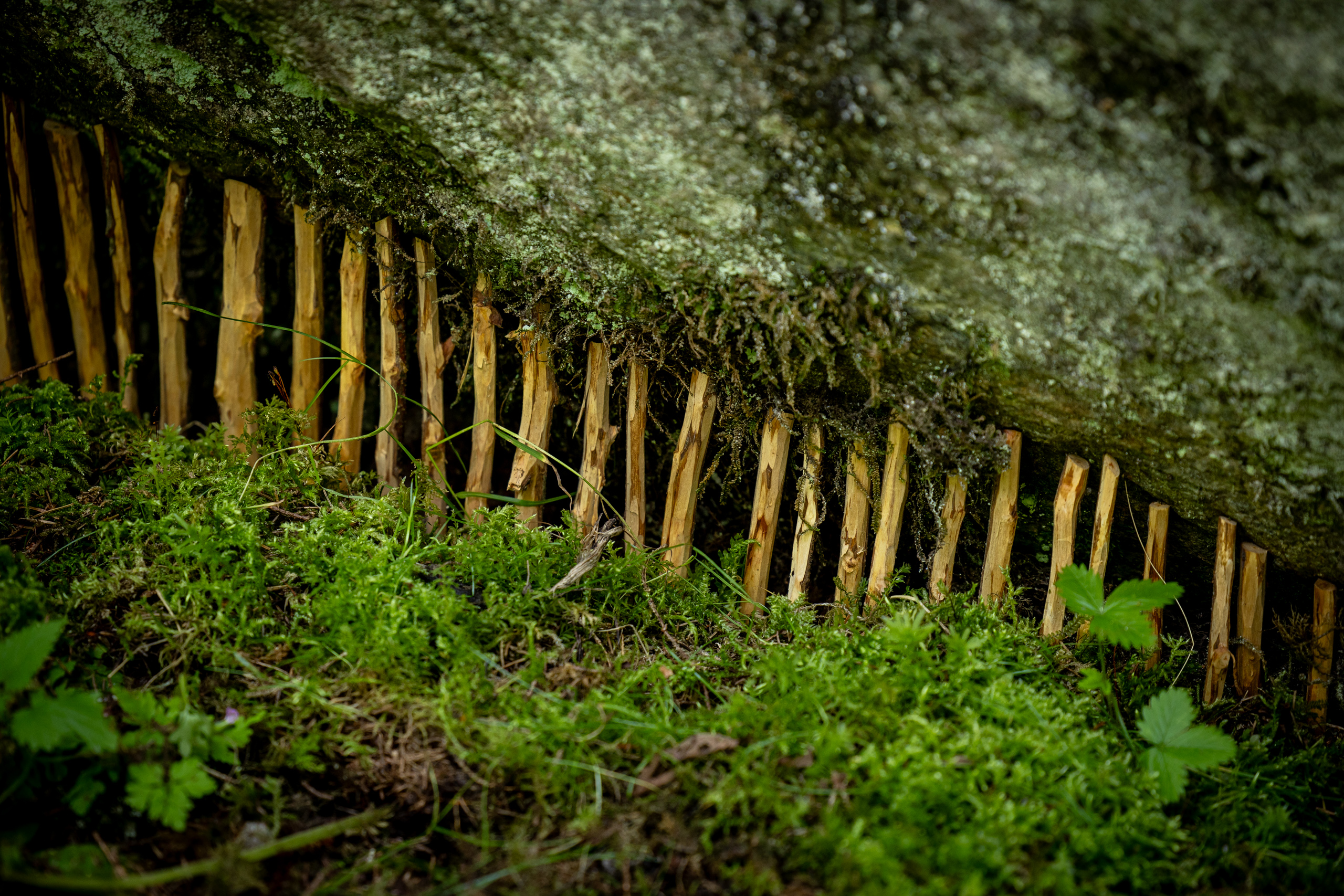
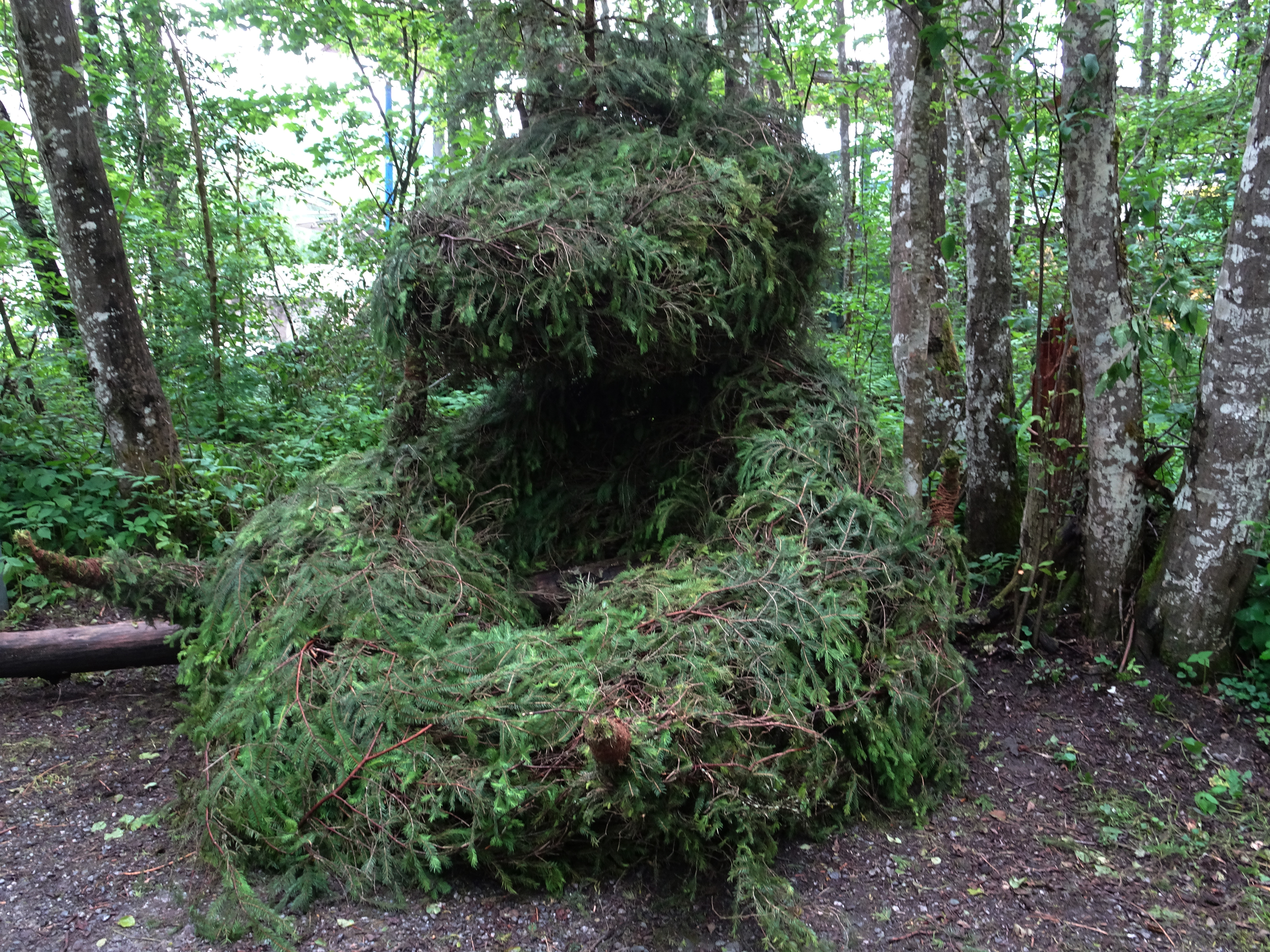
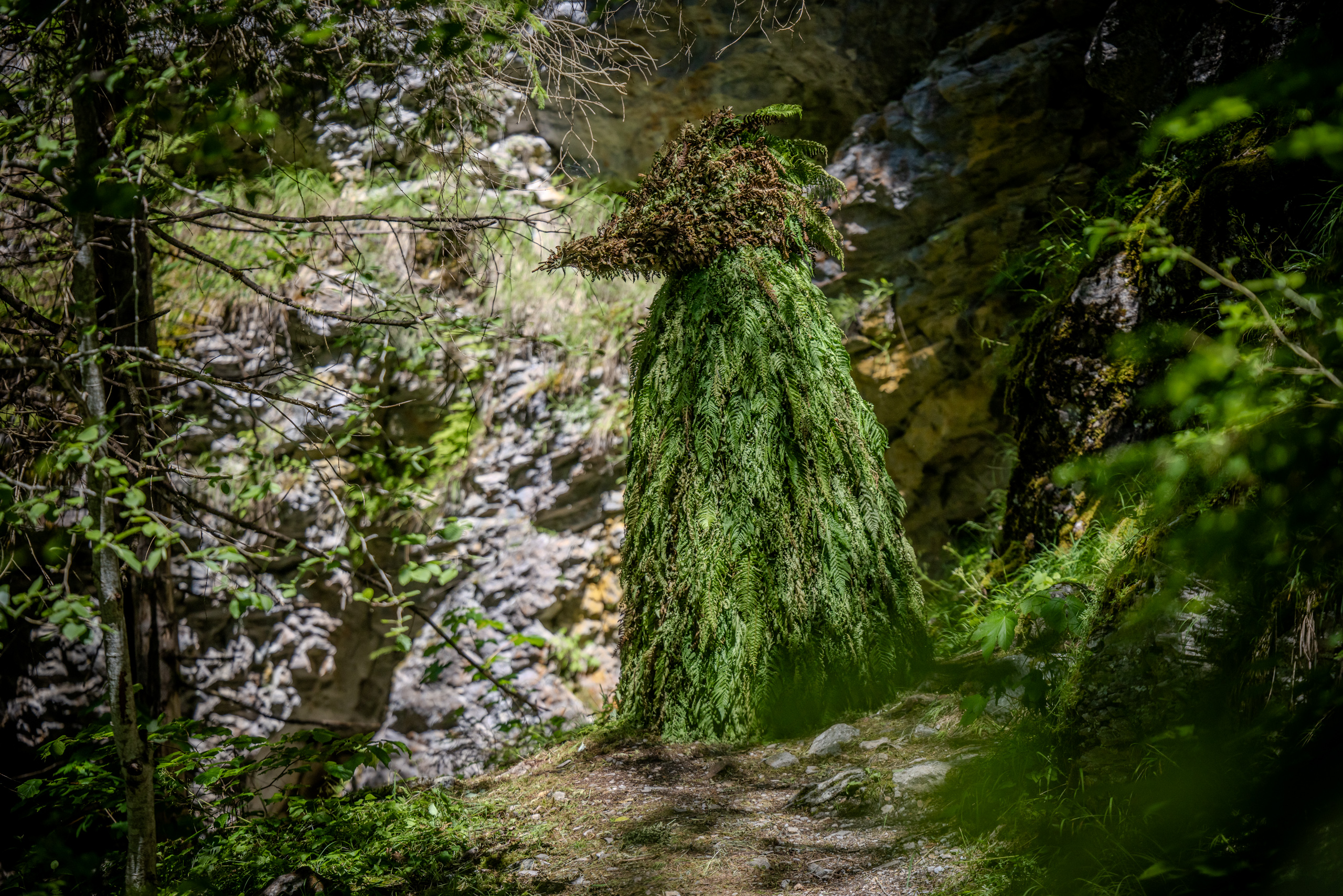
At the foot of the cliff, a creature stands on a small elevation. The creature focuses its attention on its surroundings. It looks around. Its dress of ferns refers to the special nature of Grindelwald. Inside the creature is a pile of stones. The creature is ephemeral. In time, only the pile of stones will remain - and new moss will grow over it.
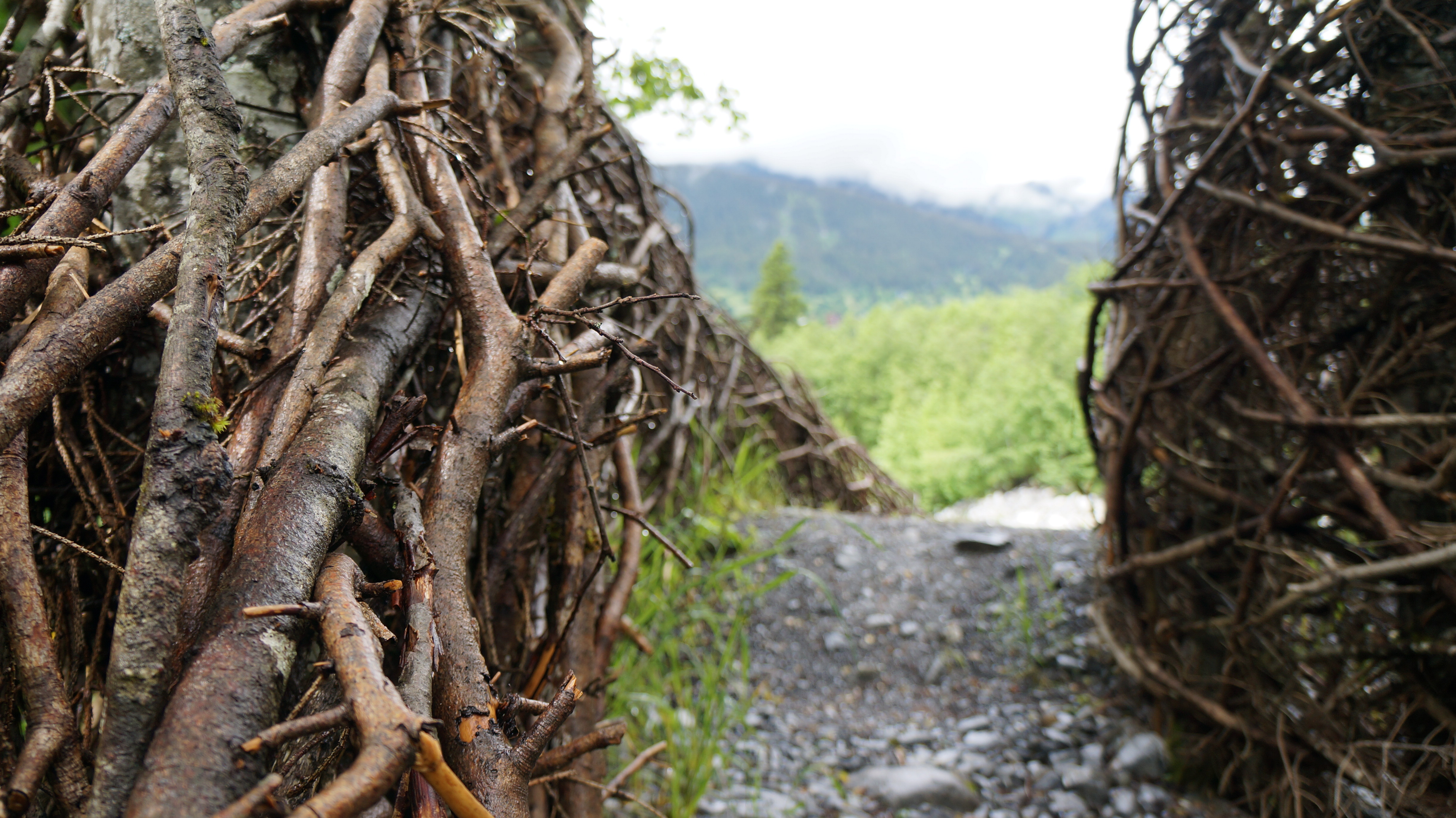
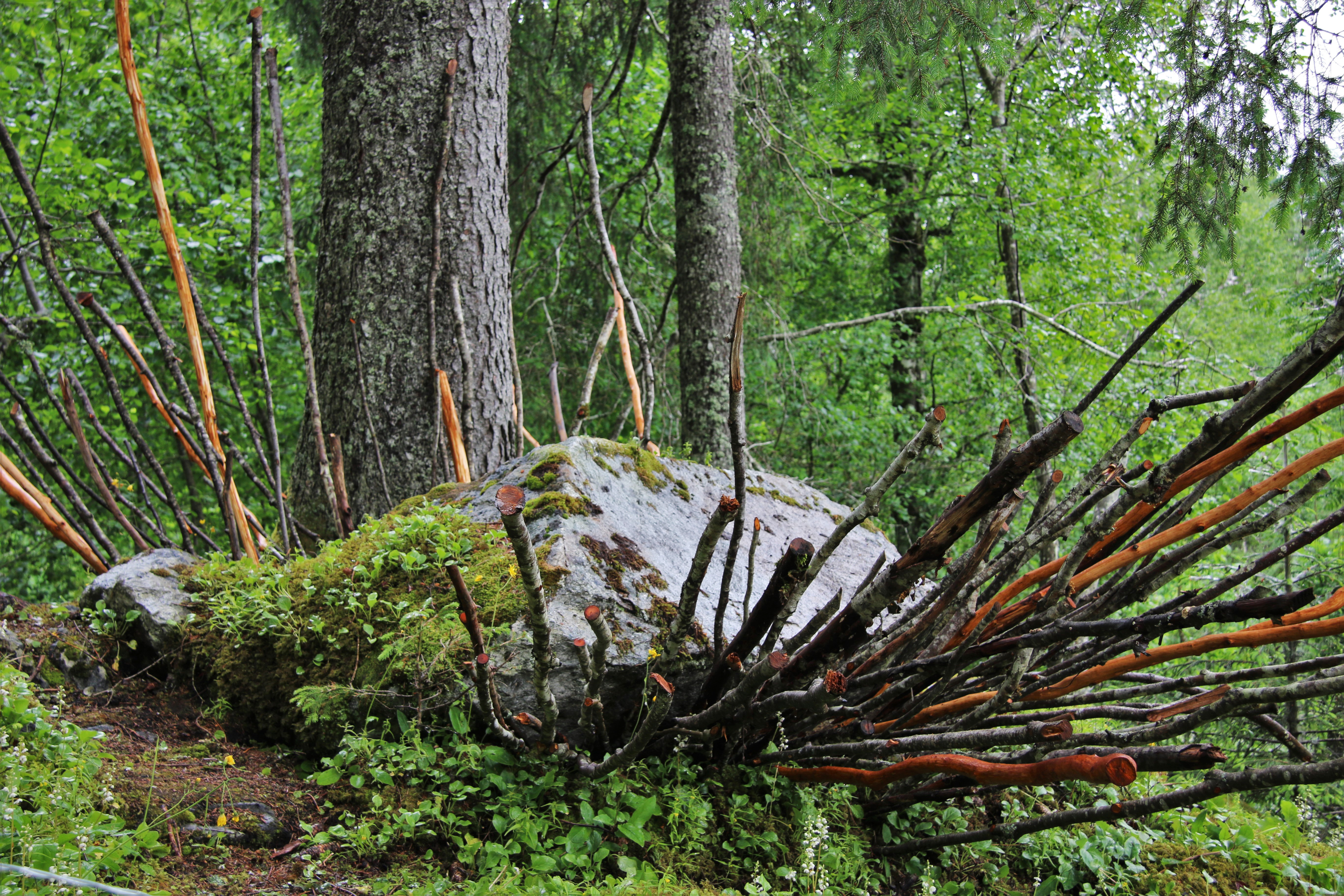
Hidden in the glacier for a long time - could this be the vacation home of the legendary, mysterious spirit? Built from branches, raw and wild - a retreat far away from civilization. A place to rest after all the hard work; on the trail of poachers and keeping order in Grindelwald.

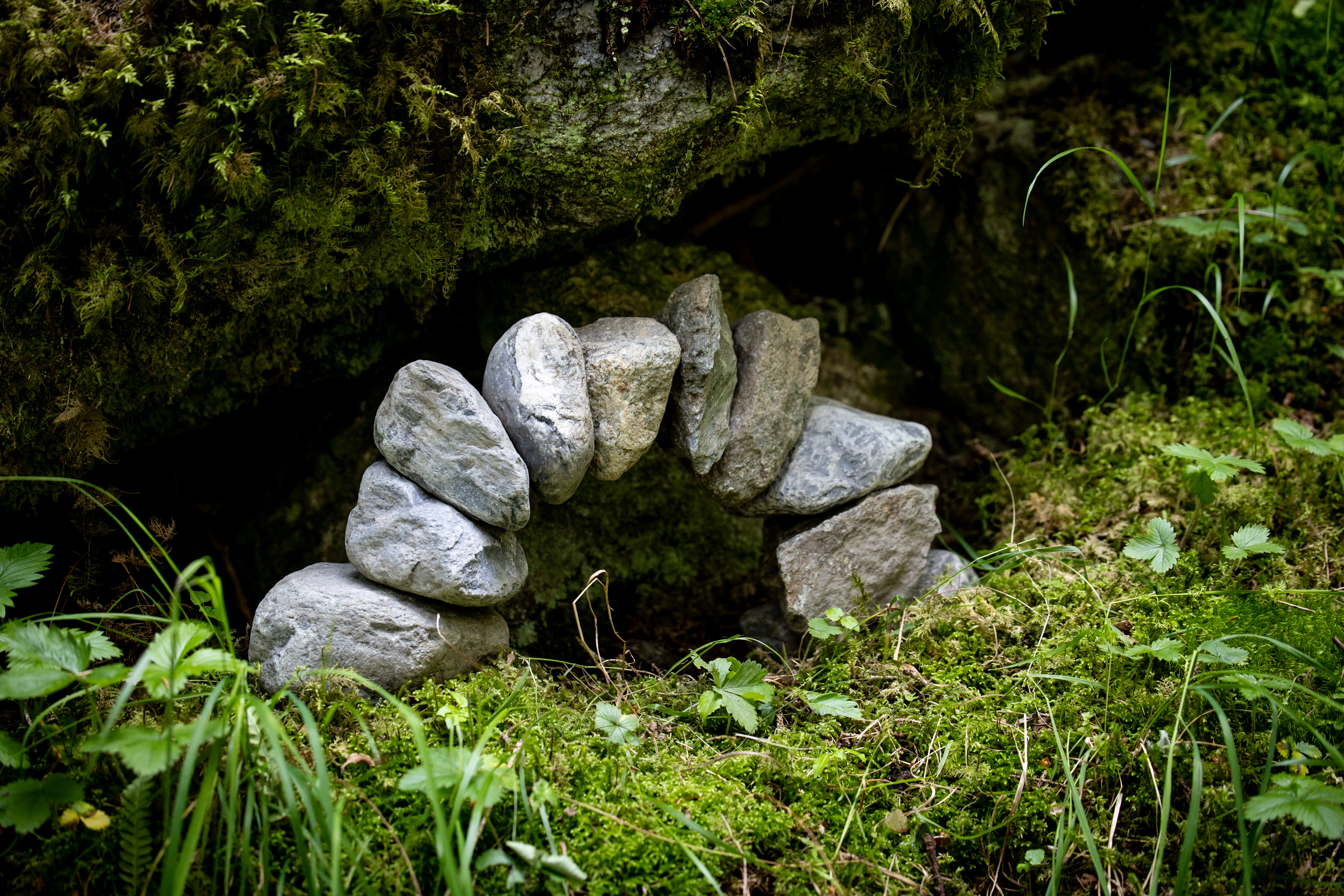
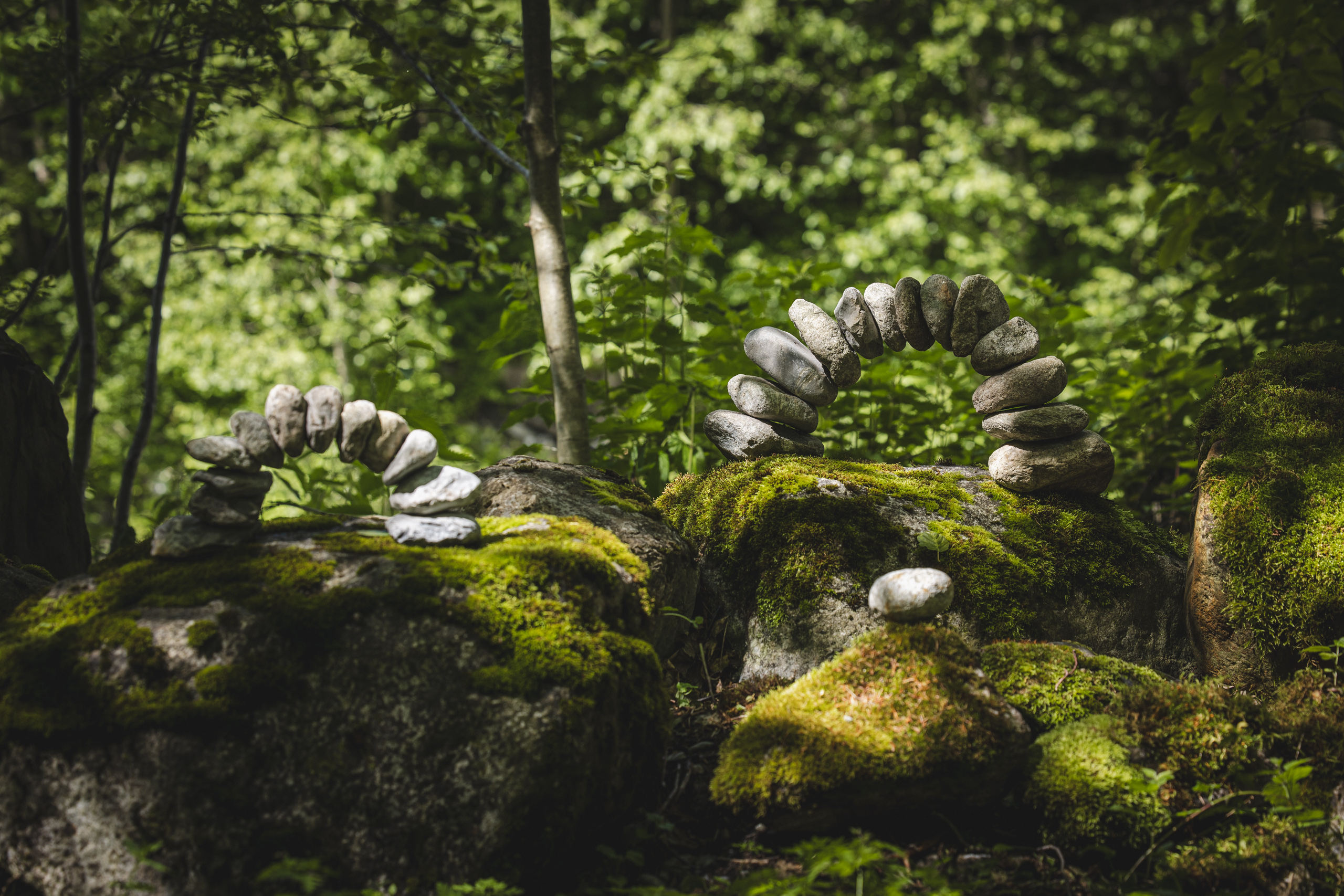
As a contrast to the “Steinmännchen”, “Steinweibchen” are created. A symbol of fraternity, femininity, equality and free space. Bridge and empty space at the same time. Nature as a stage and resonance space. Slowly walking in the forest, looking, arriving, the stream rushing, pausing, breathing, perceiving, the birds chirping, smelling the moss, feeling the stone, weighing, positioning. Make the stones dance. Humbly place the emptiness at the center.
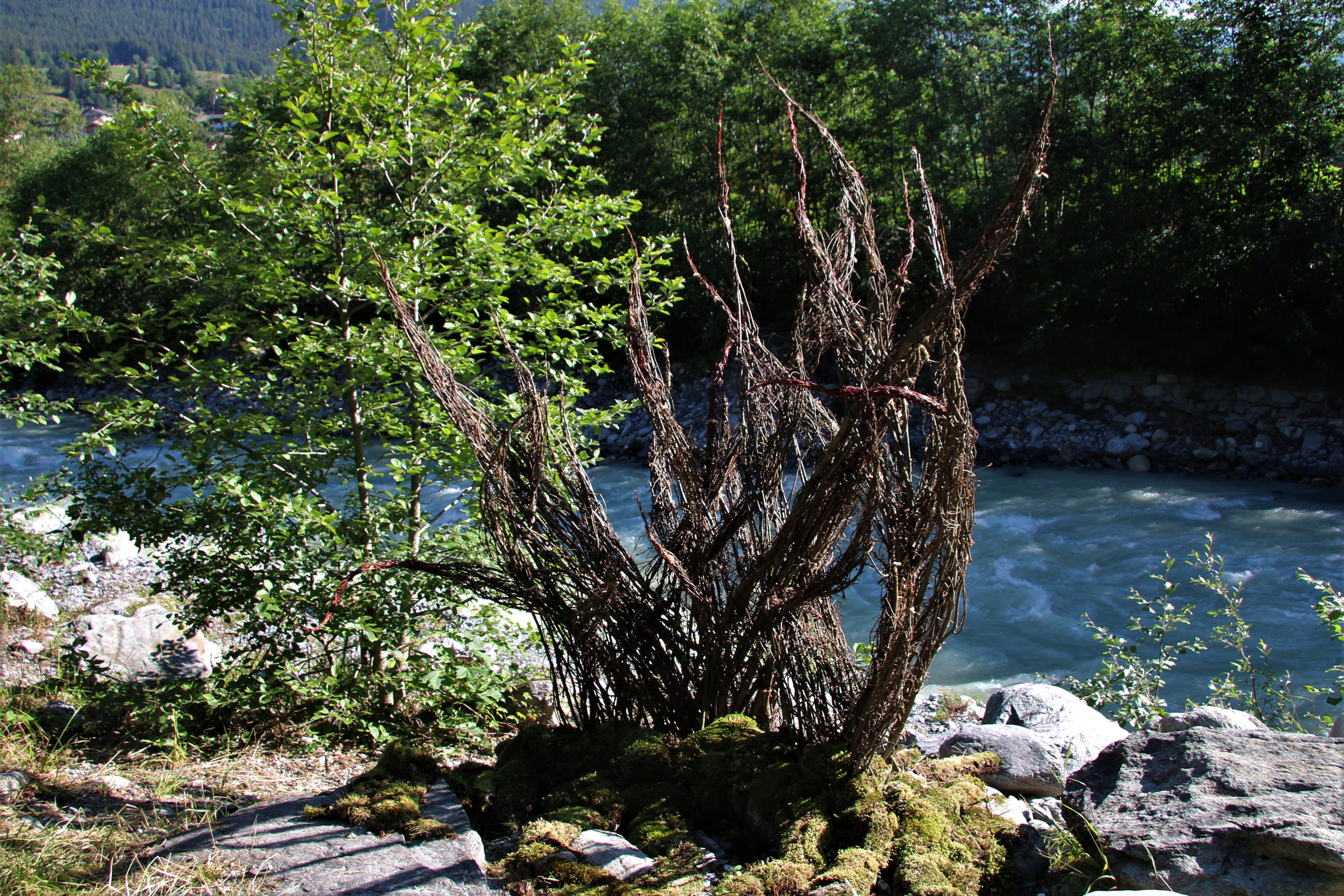
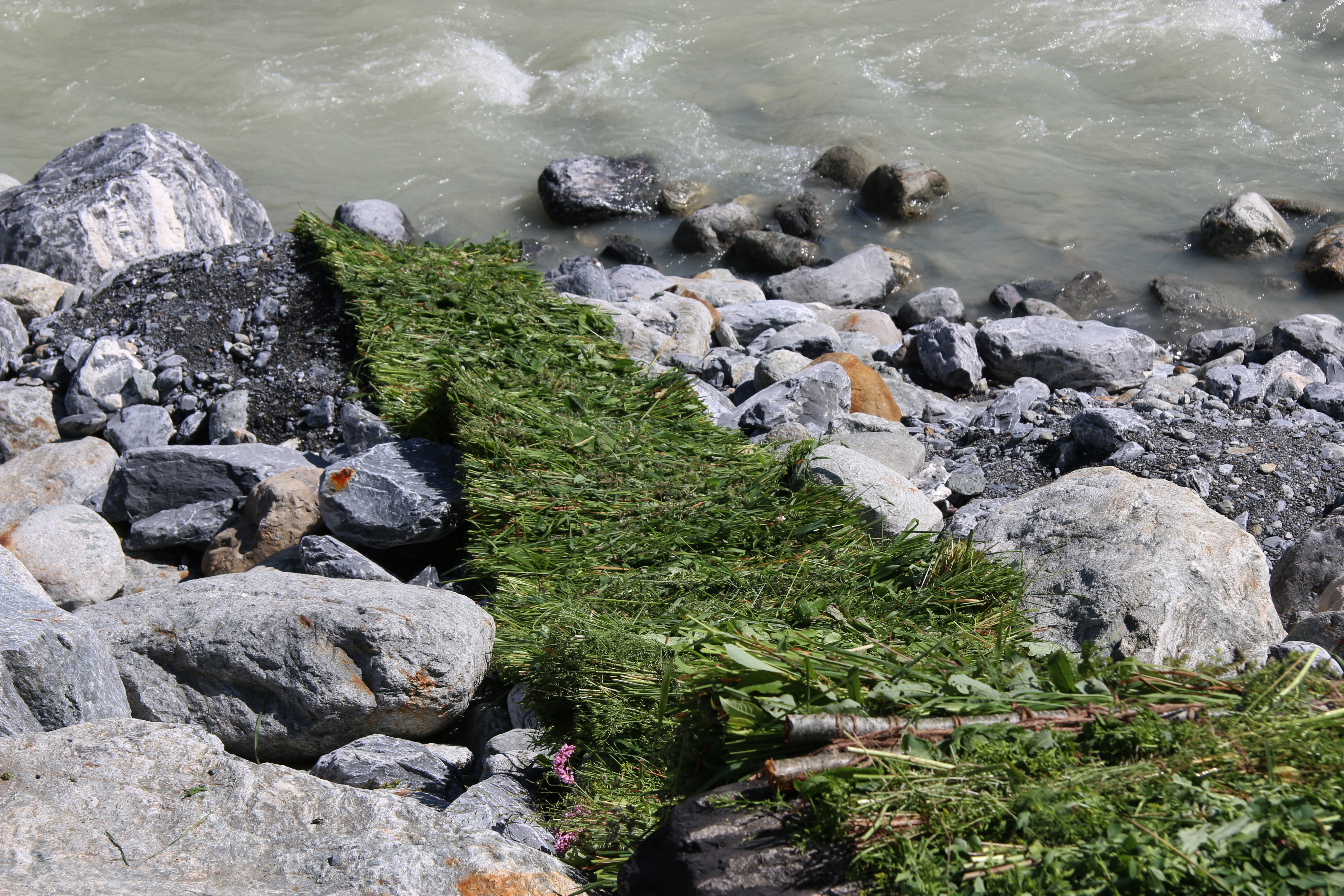
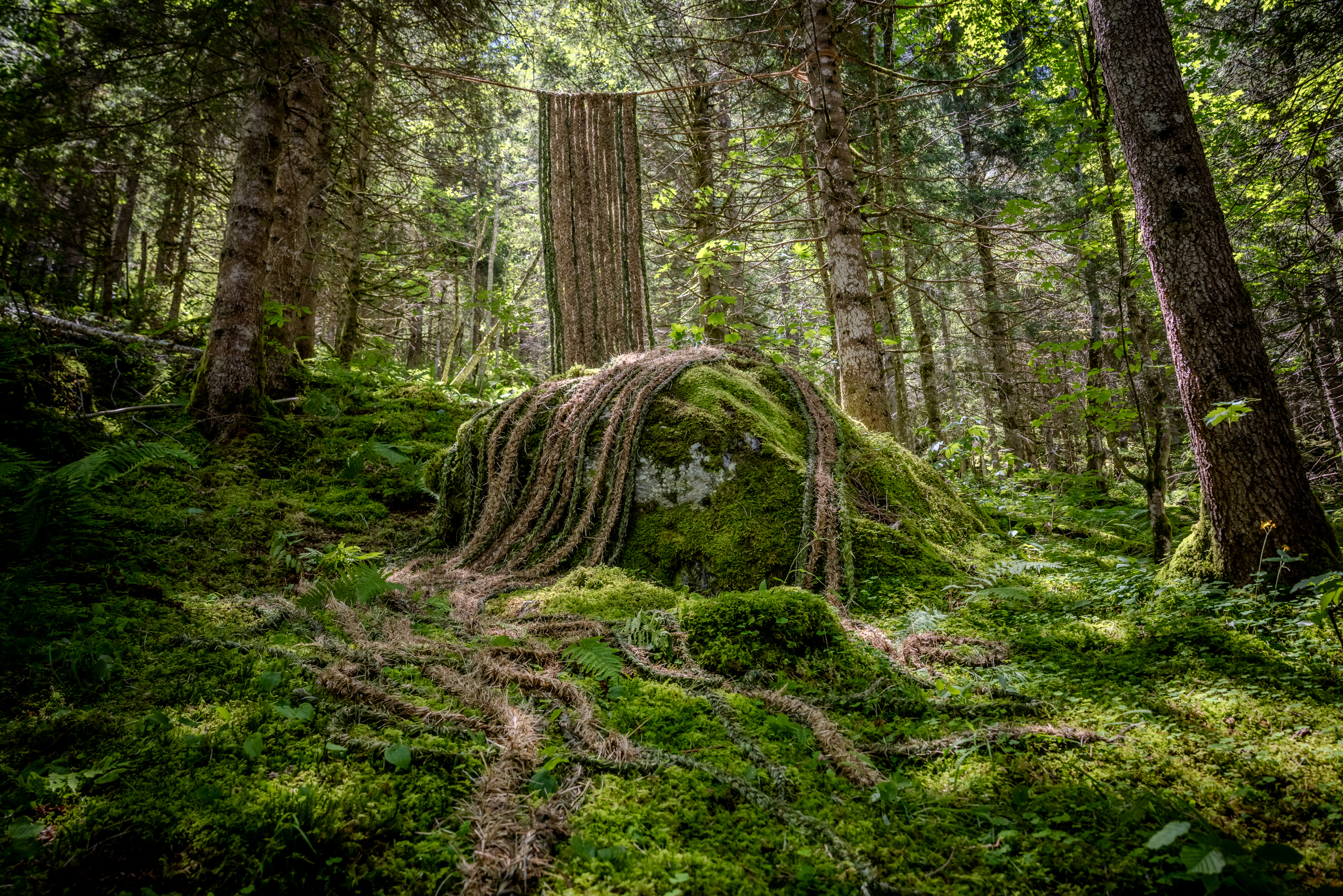
Weaving the World‘s Mane begins with artist Onongua Enkhtur’s ongoing exploration of nature through art. The project evolves through a series of materials and expressions, rooted in an intention to reconnect with the land. «In Grindelwald, nestled in the rich biodiversity of the alpine mountains, we have chosen to work with grass—lush, wild, local, and abundant. The region’s green meadows, mountain flowers, and forested slopes offer not only visual beauty but also a deep sense of harmony with the natural world. We thank Mother Earth for accepting us to collaborate with her through the Grindelwald-Land Art. Weaving, in this context, becomes a simple, instinctive gesture — a symbolic act of connection. It represents a human effort to communicate with nature, to acknowledge its silent rhythms and diverse forms. This act invites reflection on the value of what we often overlook: grasses, leaves, and so-called “insignificant” things that are, in fact, essential to the wholeness of the natural world. For this installation, we have gathered local grasses—green and dried—and woven them into flowing forms, suspended from the trees like a waterfall. In doing so, we honour the unseen threads that hold nature together and celebrate the quiet beauty of the wild.
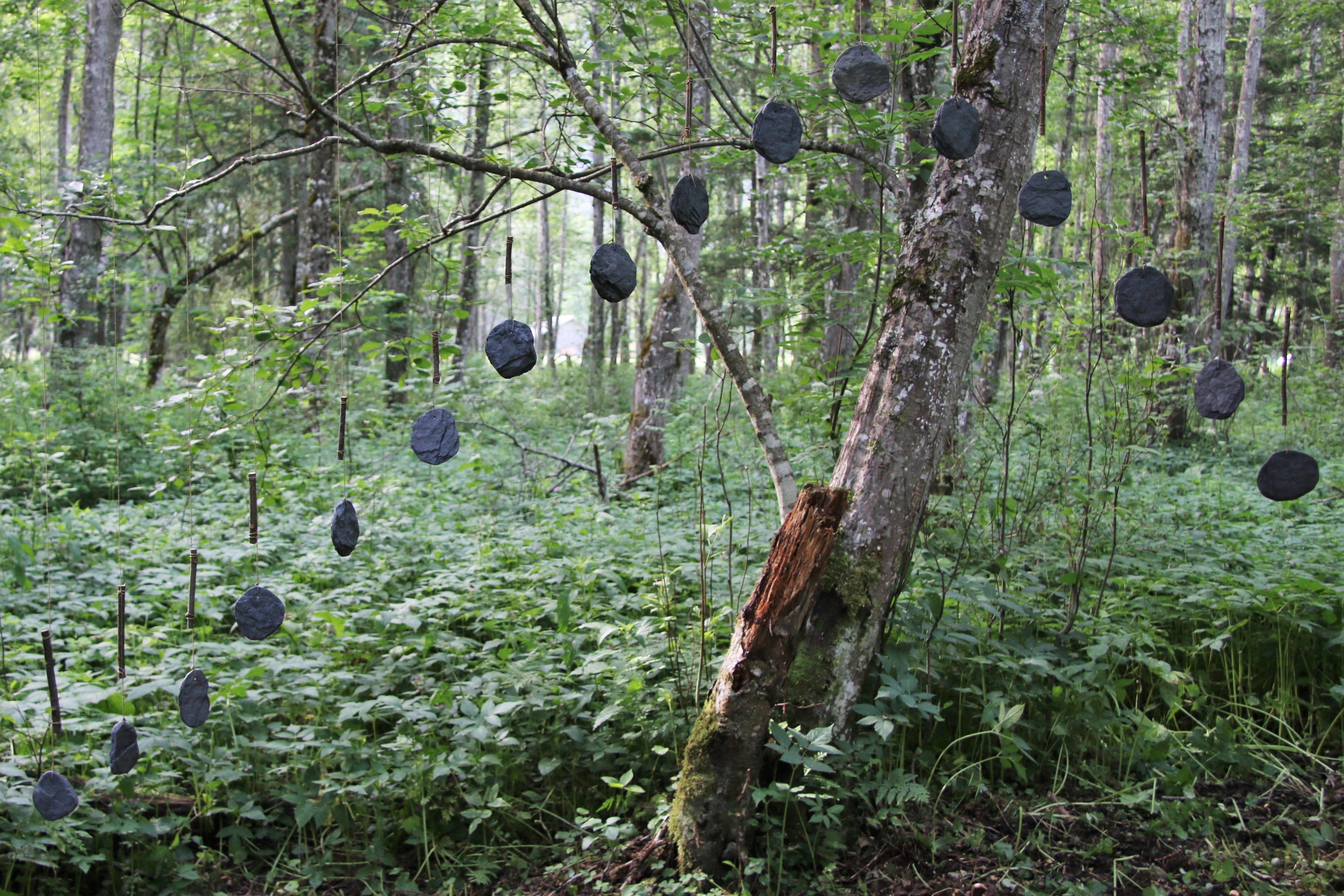
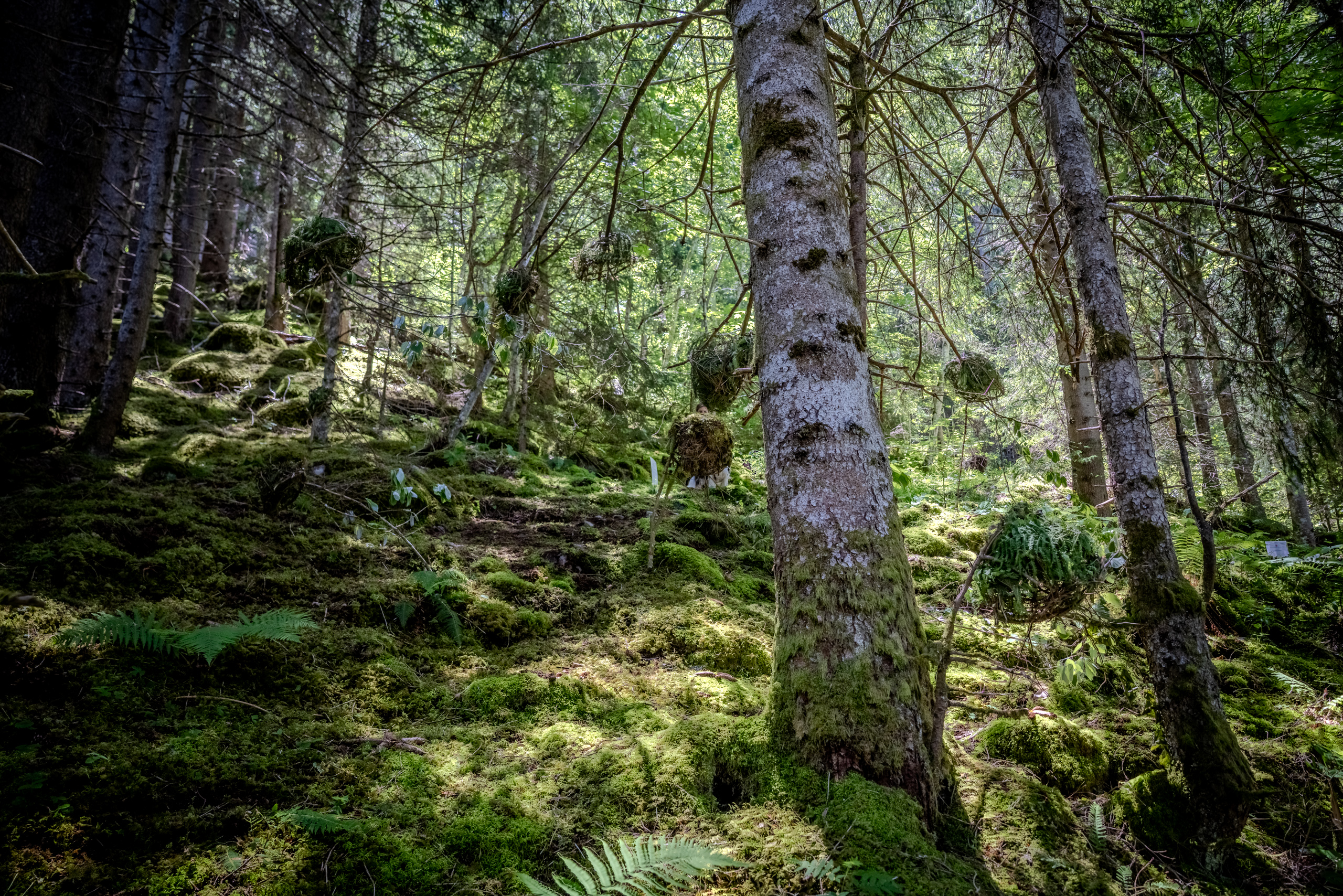
The “Mountain Jellyfish” installation intervenes in the natural landscape of Grindelwald - a backdrop characterized by mighty mountains and ancient glaciers that once lay beneath the sea. Inspired by this geological memory, the objects are reminiscent of jellyfish that seem to float in the forest, transforming the place into an underwater scene - sea creatures that return for a moment to the place that was once theirs. Made from natural materials from the surrounding area, these airy forms build a bridge between the alpine present and a sunken past. At the same time, the work looks to the future of the landscape and reminds us that the earth is constantly changing. Perhaps the jellyfish will indeed return one day - if the planet's transformations once again pave the way for them.
Installations 2024
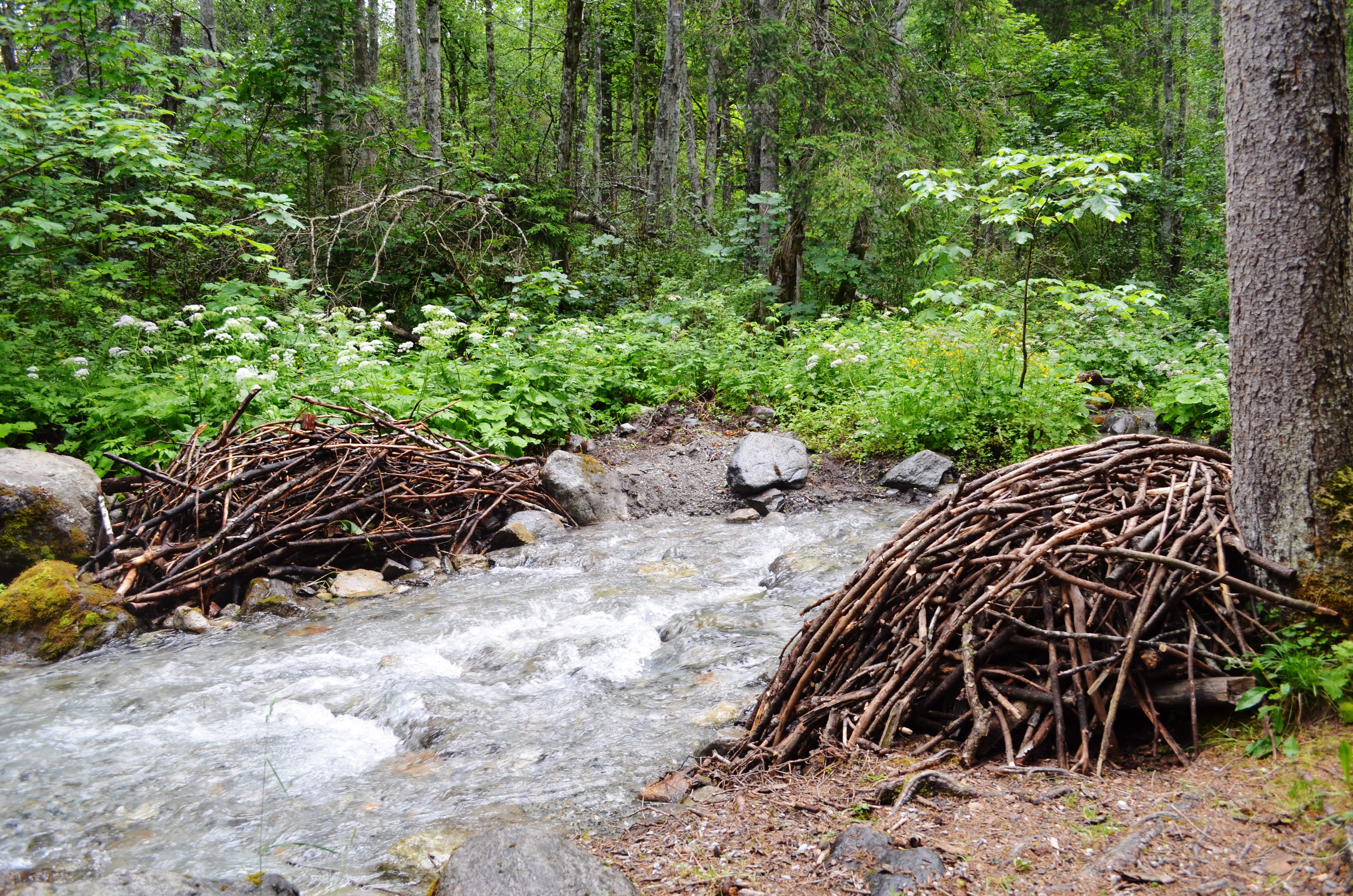
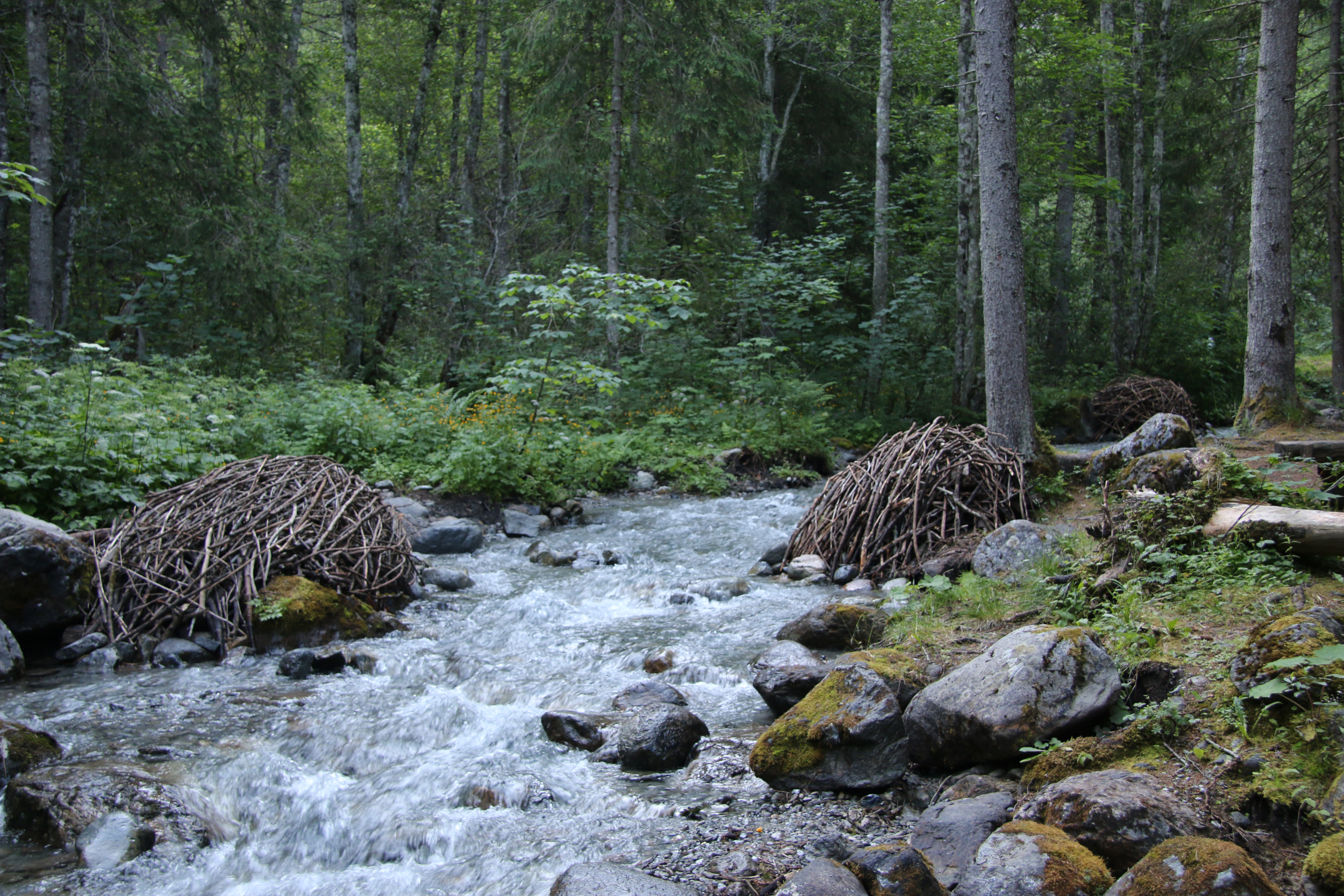
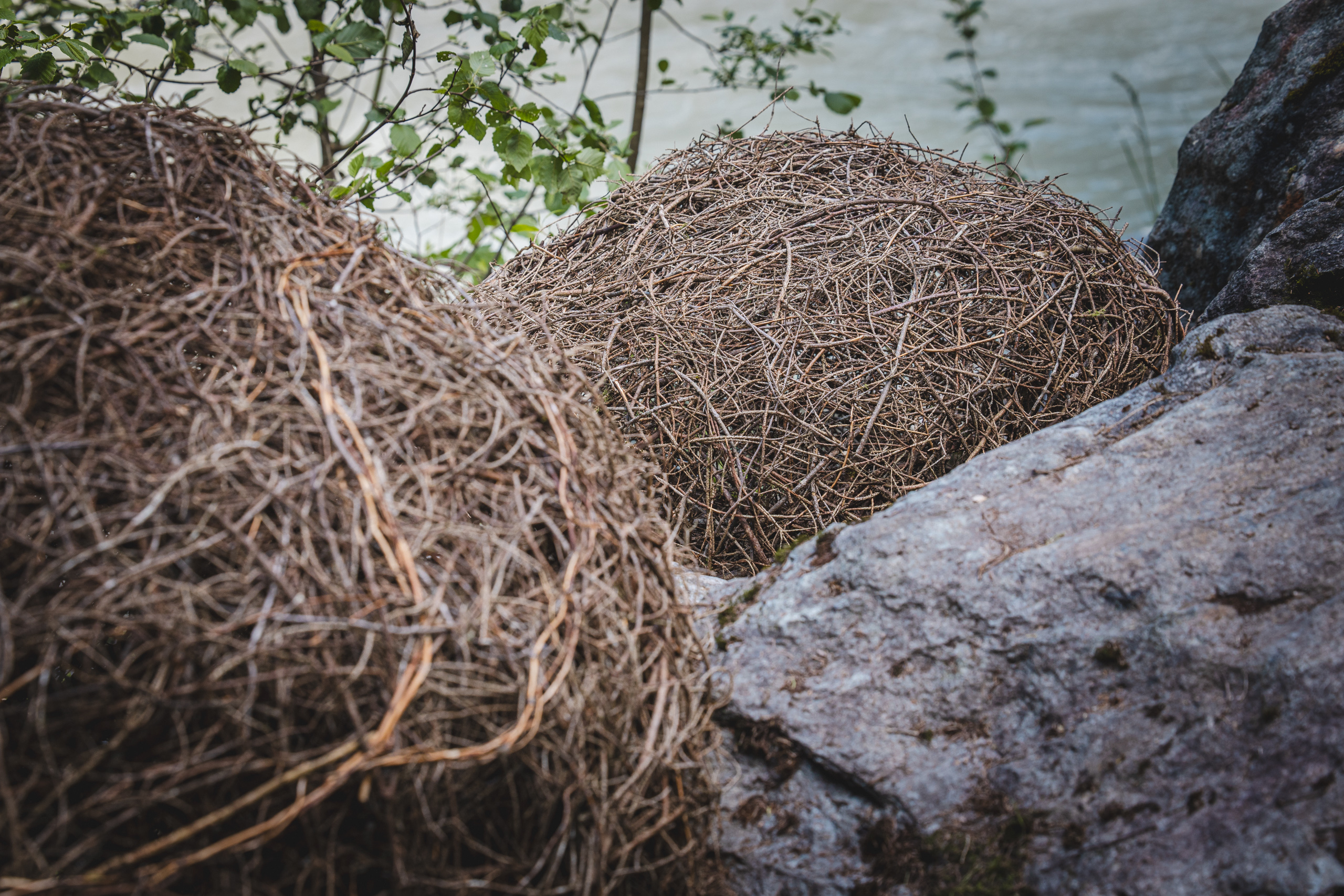
Inspired by the unique location, the Lütschine river in the background and the stones and boulders along the path, the idea of creating «stones» between stones from the spruce branches found on site grew during the creative process.
The only tool we used was a pair of rose scissors to cut the branches to size. The five «pebbles», which were created from the intertwined and intertwined branches, appeared delicate despite their sometimes remarkable size, which contrasts with the chunks of stone between which they have found their place.
Natural Collagen
The object represents two burnt cities of war together with two large figures and symbolises the importance of communication: „You better talk before“. With my art, I want to express how nature can continue to decompose in art.

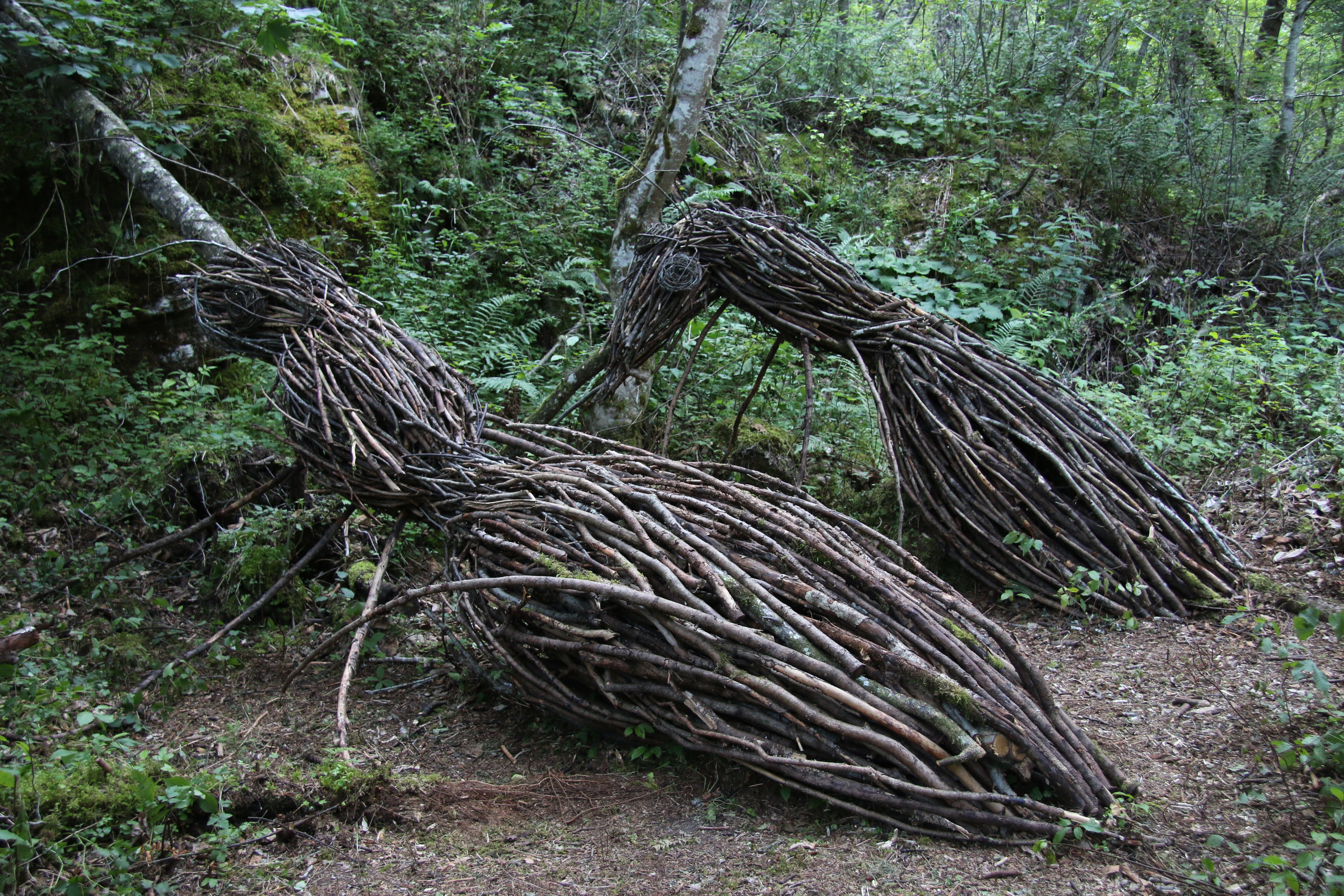
Don‘t we all wish to glide through life lightly and weightlessly? Perhaps not constantly, but from time to time? Just as our woodland creatures «lightly and weightlessly» through the clearing. They invite us to linger, discover, and float along with them in ease.

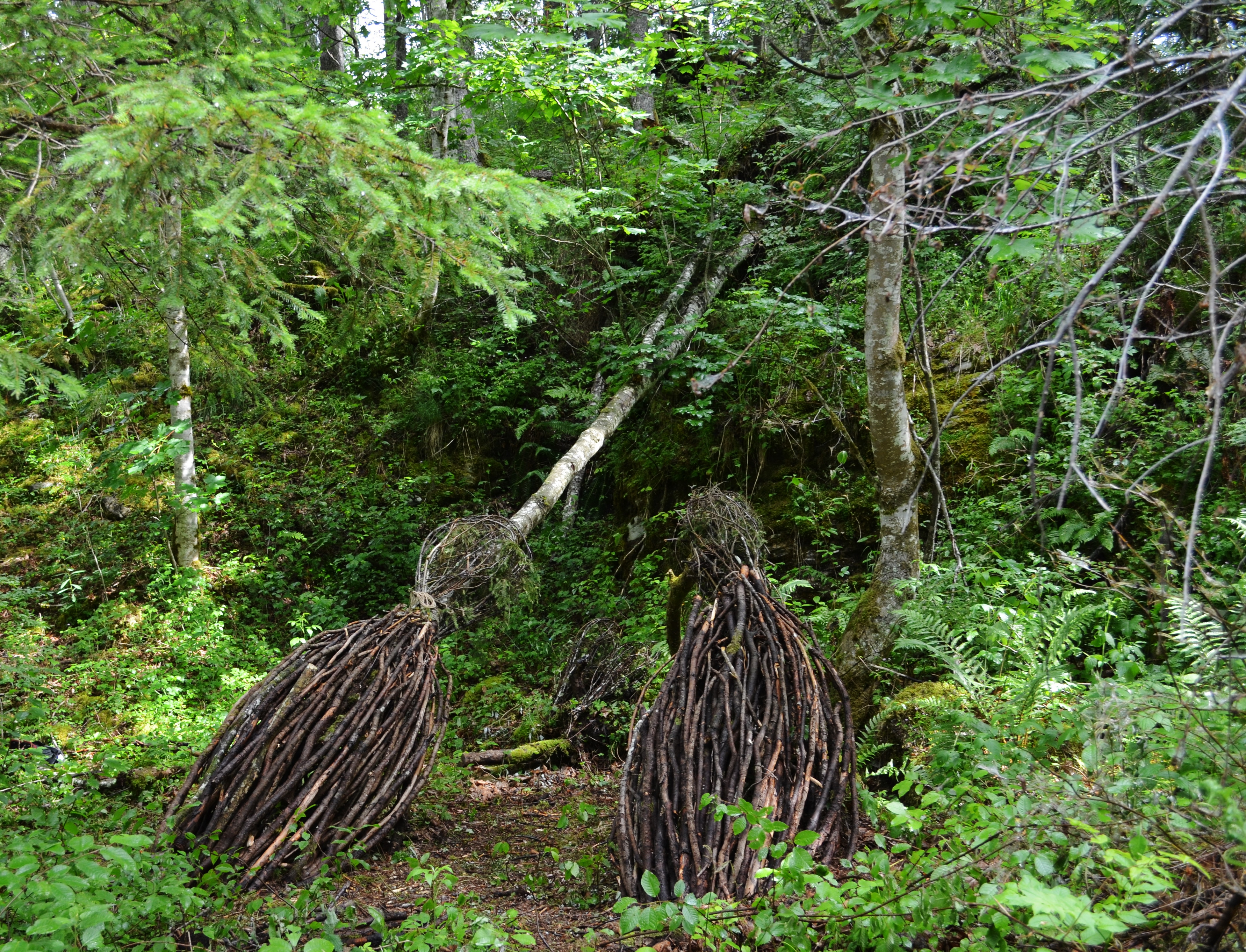
Elves and fairies love to dance at dusk in secret places within untouched nature. However, the places where they can do so freely and unseen are becoming increasingly rare. A new, young generation of these enchanting nature spirits is now shedding their shyness and daring to step into the public eye. Especially for «LandArt Grindelwald», they have choreographed a dance to raise awareness about nature conservation and the needs of all nature beings. Most still perform within the safety of a «nest» we have prepared as their stage. Yet, some adventurous ones are already venturing further out to reconnect with humans.


In a sensitive process of compaction, boulders are brought into a graceful form of self-supporting spanning. The delicate balancing of these stones requires a great sense of manual dexterity. As each stone constantly strives to fall towards the centre of the earth, a balance of forces is created that ensures a certain stability and strength.
Two stone men become one stone woman. They meet and lean towards each other as they like each other. Touching each other, leaning on each other, supporting and strengthening each other in the common new. Bridge and empty space at the same time. The missing and the expected in balance. Abundance and enrichment are space through cohesion. Stone and stone.
Closeness and distance. Speech and silence. Moment and eternity. Yesterday and tomorrow. Fate and Destiny. Roots and wings. Body and soul. Silence and noise. Stone and stone.
The rise of social networks and the widespread dissemination of information channels have made it increasingly difficult to create spaces for oneself. «Conexiones neuronales» invites the viewer to return to nature to activate thinking. In this way, a dialogue is generated between the viewer and the artwork, the artwork and the landscape, and finally between the landscape and the viewer, far from noise and close to silence.
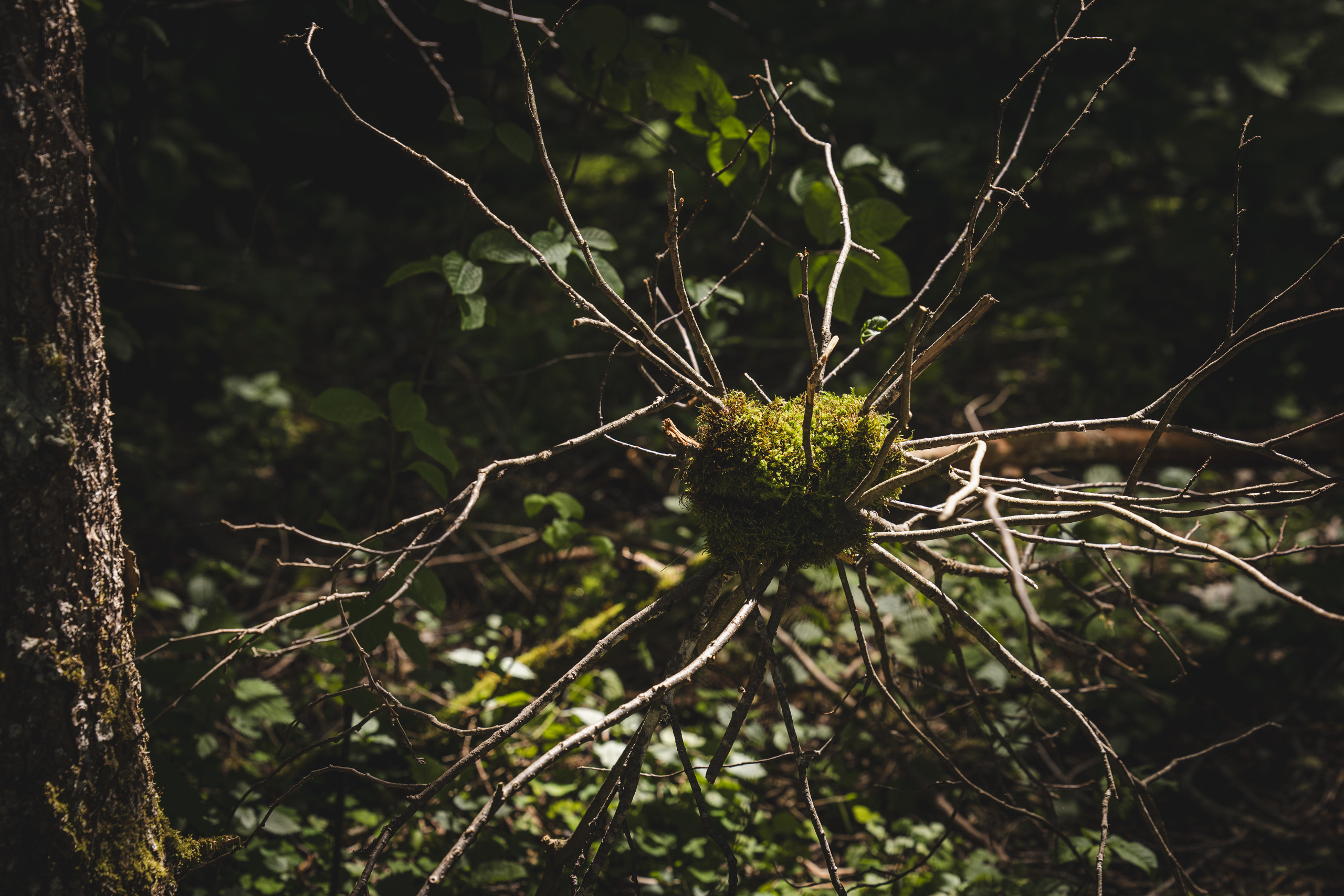
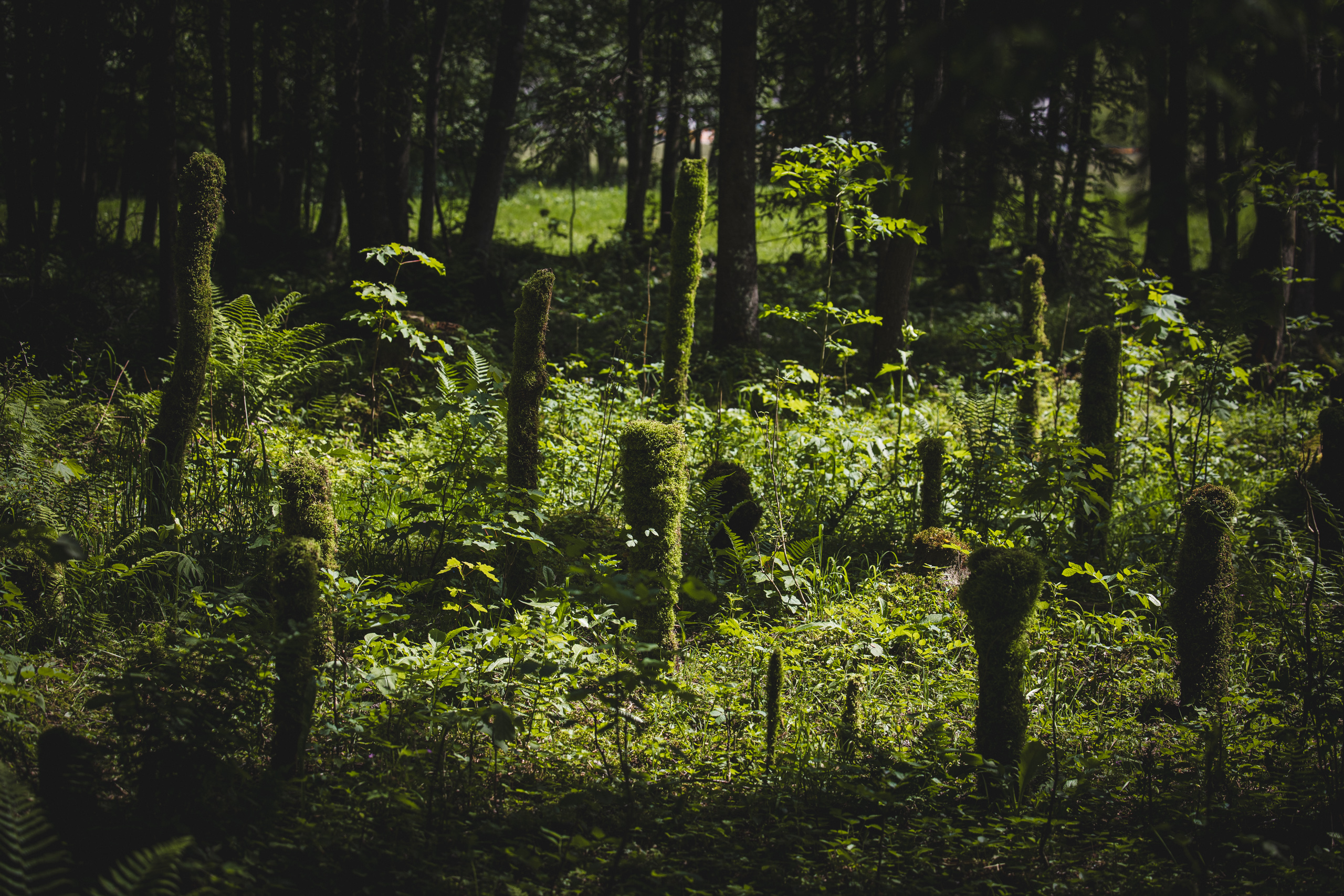
Moss roots growing from the forest floor.
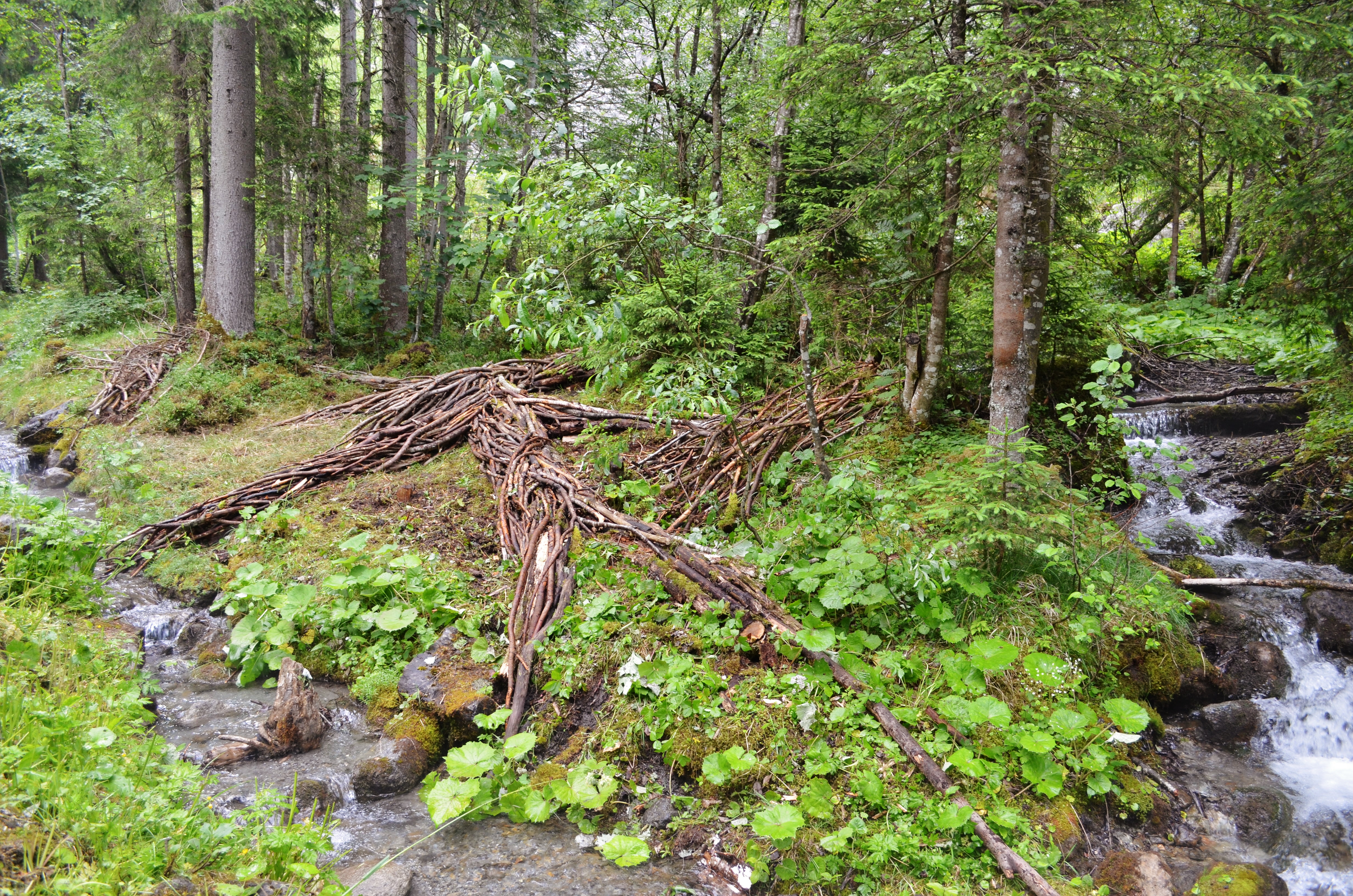
The trees communicate with each other through mycorrhiza – the symbiosis of fungal network and tree roots that allows trees to exchange information. What information do they share with each other? Mossy branches found in the forest, buried in the ground for a root conversation.
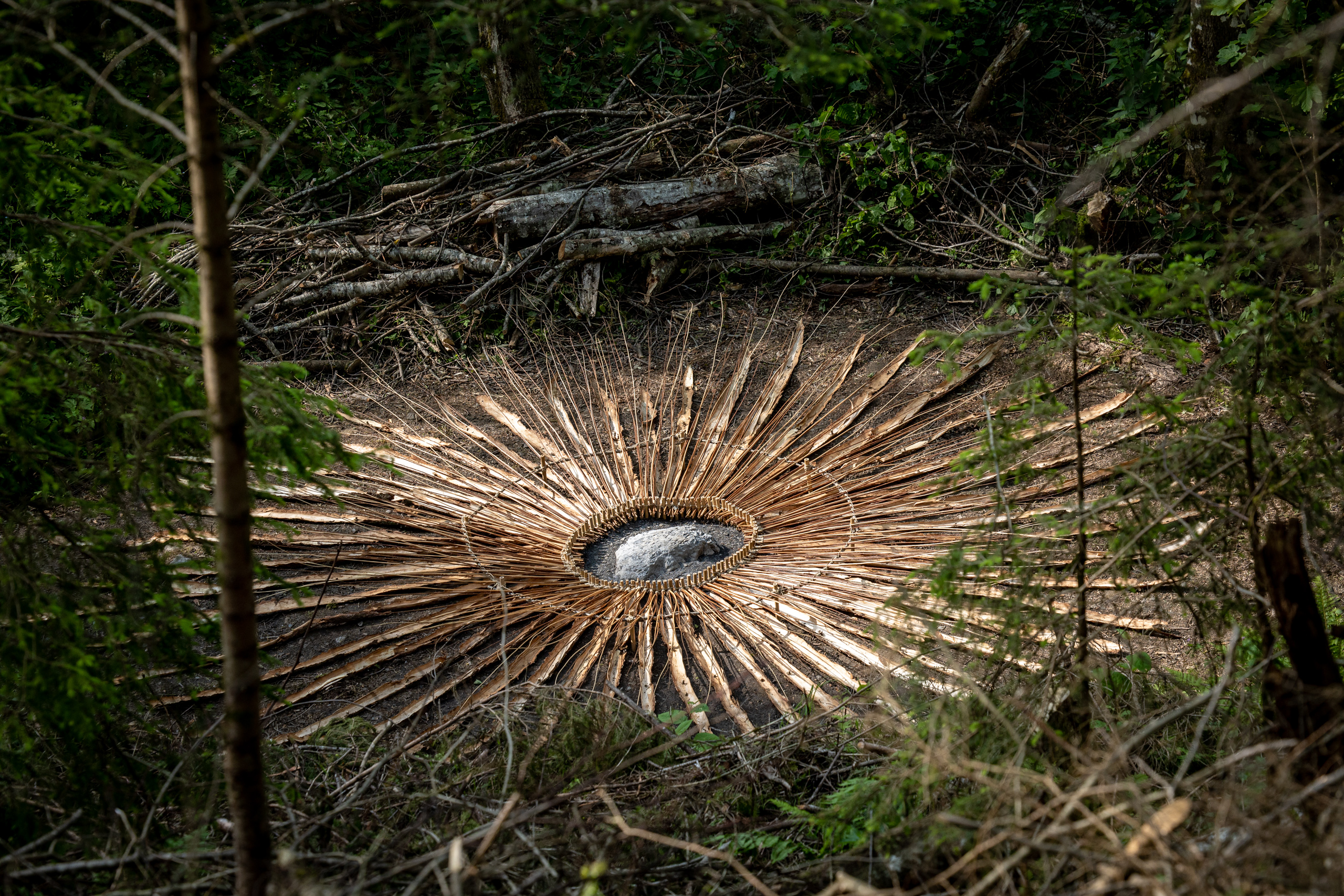
Horizon as the tangible, visible edge of our immediate environment. The landscape extends towards the horizon. Around the horizon, the environment pours out, flows around me, through me. The work ties in with last year‘s theme and carries it further. It is interested in recognising and experiencing our environment, the space in which we are integrated, the simultaneity before and beyond the horizon. The relationship to our environment in general is at the centre of my work; it is important to create a connection to this environment, this surroundings, this landscape, because we are in a constant exchange with it; flow and return flow.

Installations 2023
Once upon a time, not so long ago, when the internet was just a word and smartphones and social media had not yet been invented, we communicated in a different way. And we managed to find each other, to be together, to be whole. The web created during the Land Art Festival is about this moment. Melancholy, melancholy...

This installation is a statement for pacifism made of locally collected stones. The symbol consists of a combination of the letters "N" + "W" (NO WAR). It is inspired by the peace symbol designed by Gerald Holtom in 1958, which represents the letters "N" and "D" in the flag as a symbol and is the official symbol of the Campaign for Nuclear Disarmament. With this work, the artist questions the role of symbols in our collective consciousness. Could new symbols help people to think differently about the world? The artist encourages us to think - about a world in which conflicts and nationalism are constantly on the rise.

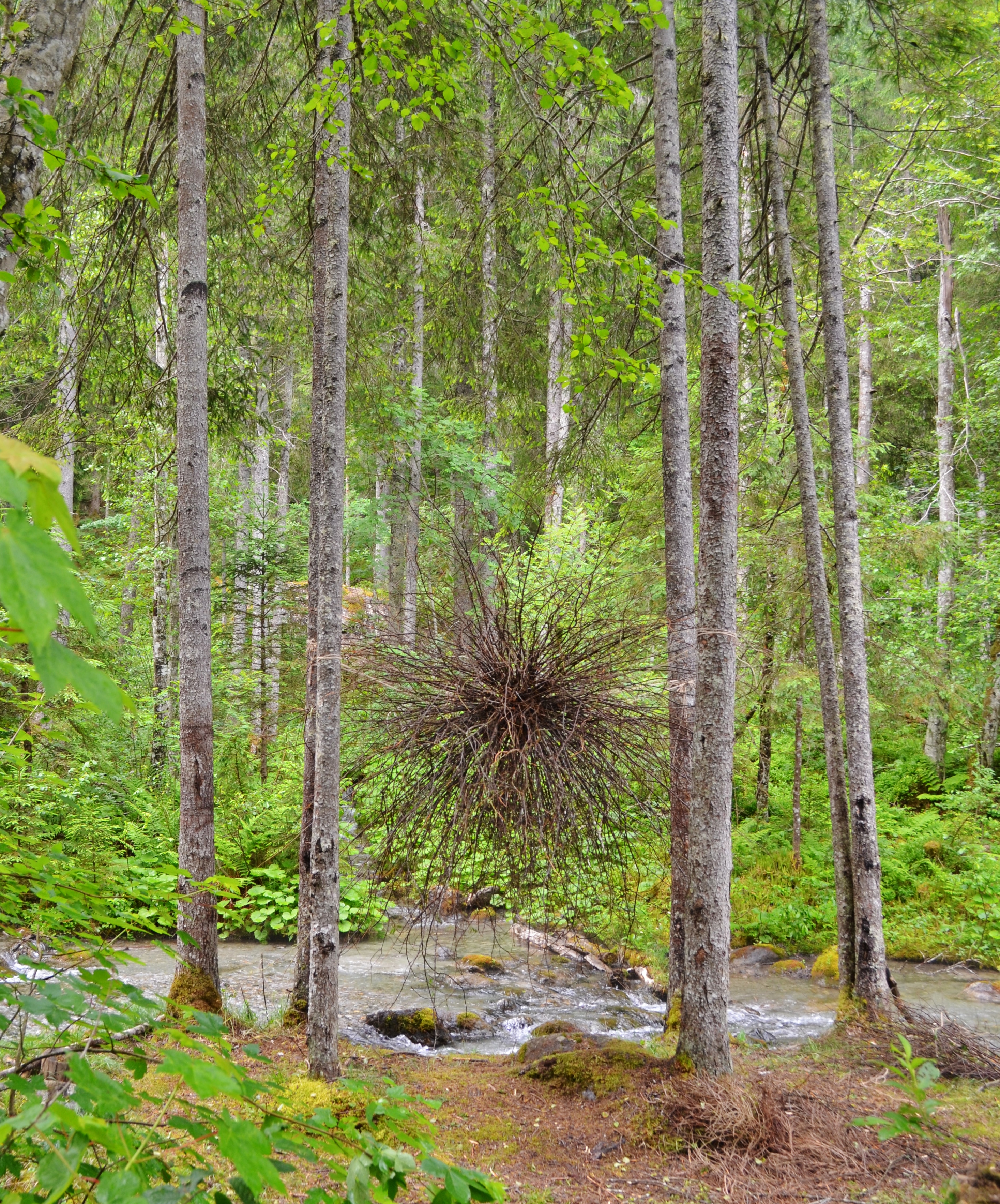
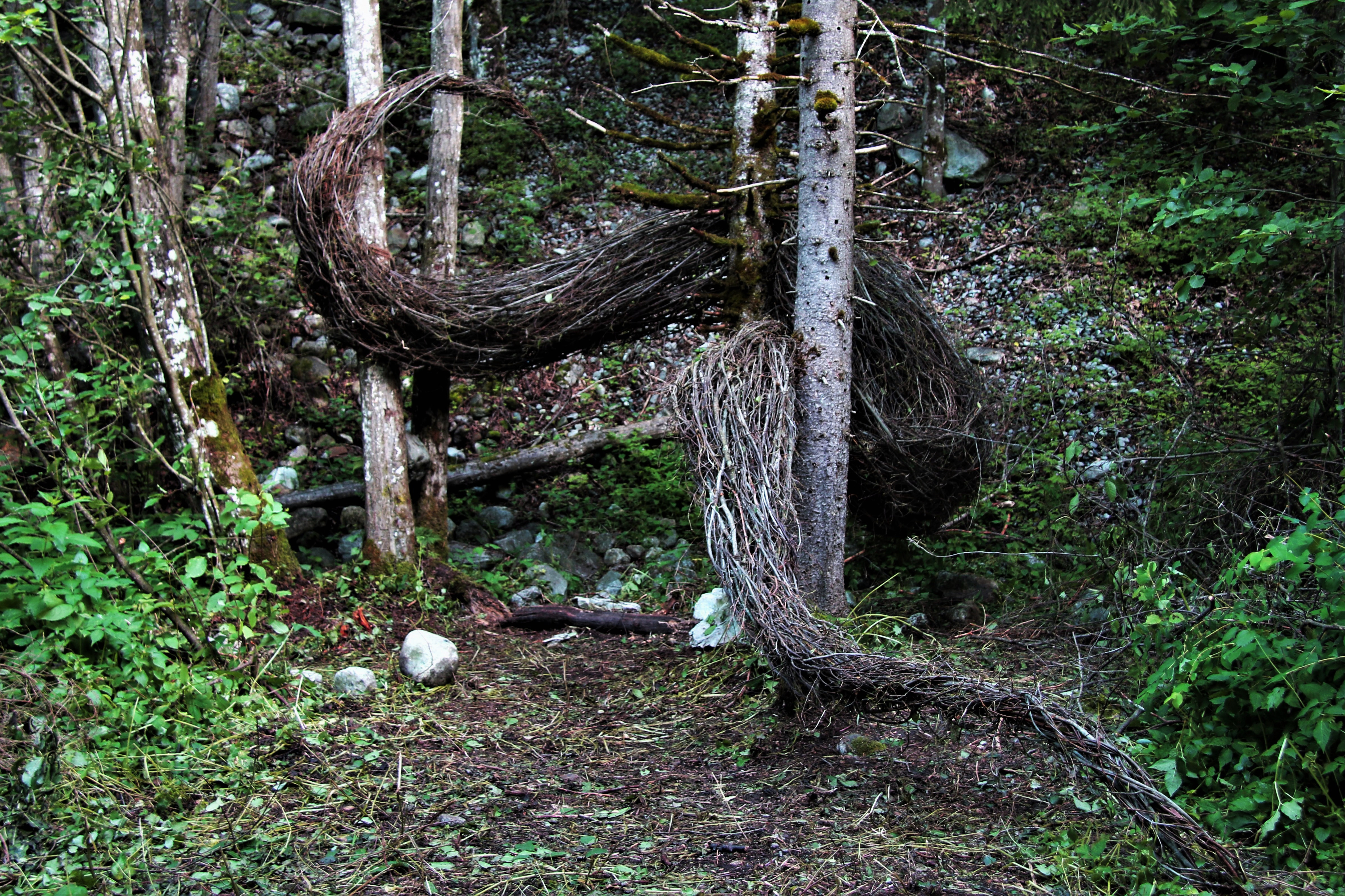
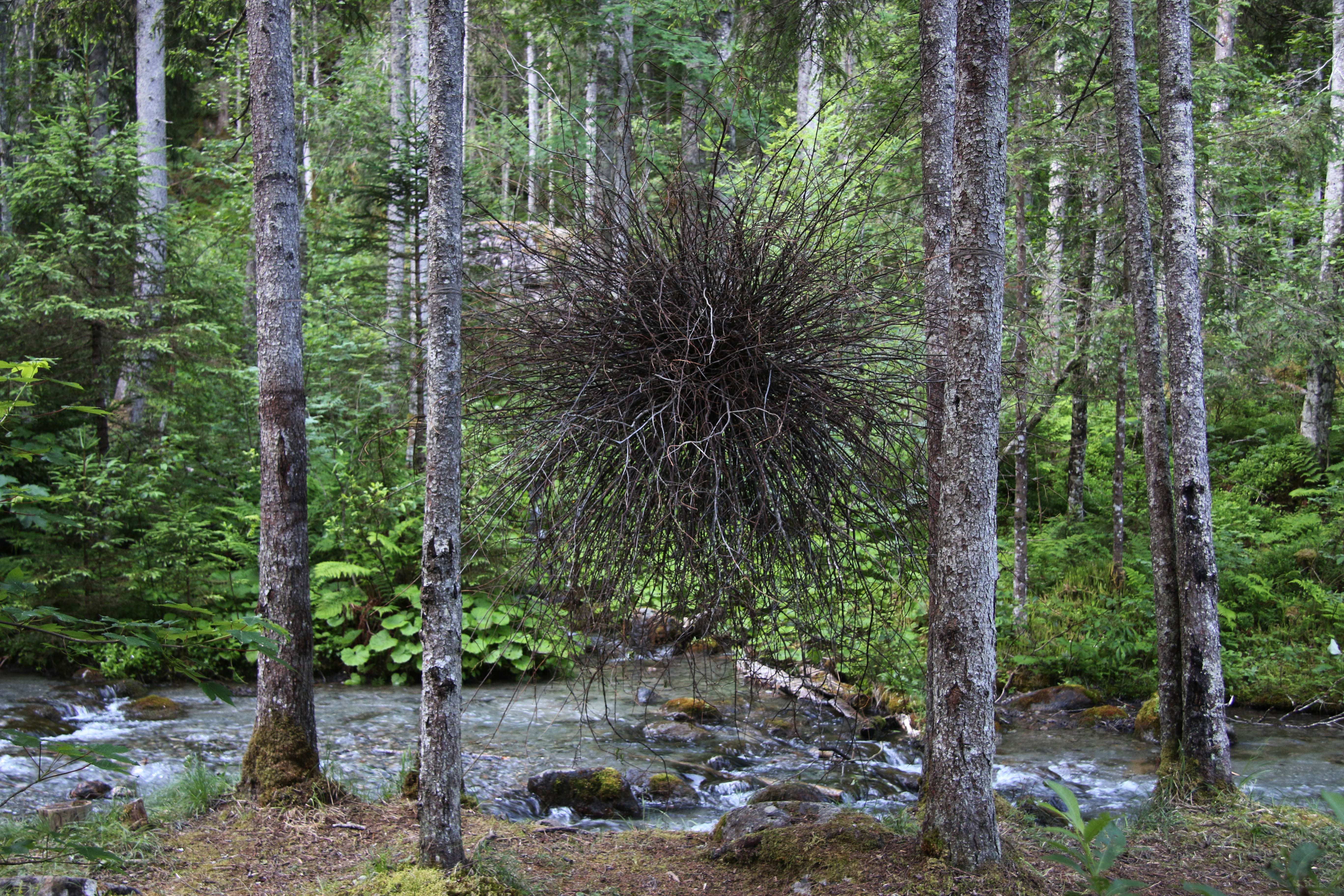
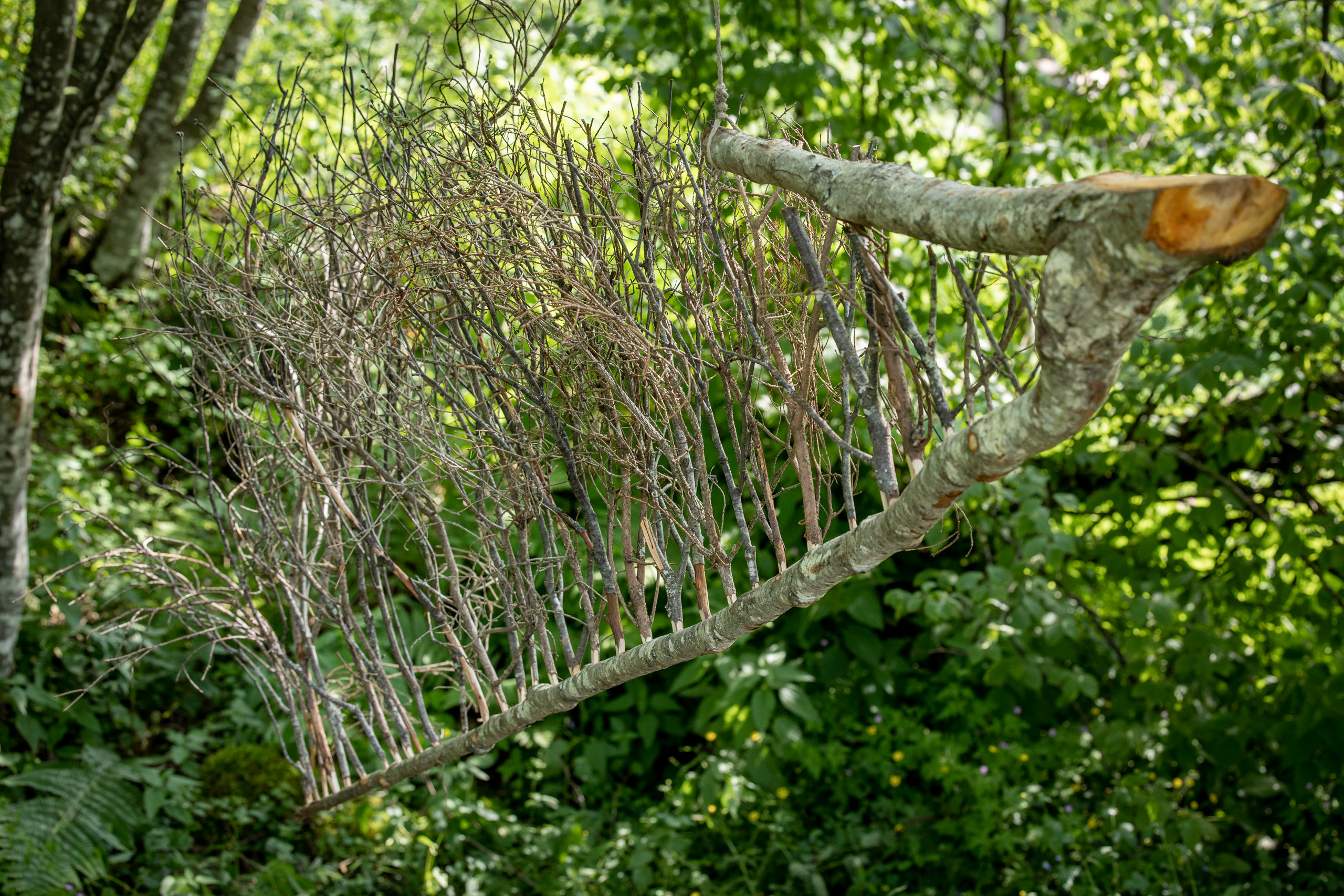
Vegetation in constant search of balance. Branches strive towards the light with the urge to fill the empty space, to the horizon and beyond. We humans also always want to go further, over the horizon; a transition into the other. With his work, Andreas Spitteler draws the audience's attention to their own position and the surroundings, the environment in which we find ourselves ("Horror vacui" Latin: fear of empty space). Hanging branch with fork, one part floating horizontally. Finer branches are embedded in the larger ones, filling the space. The whole thing rotates on its own axis.
In our success-orientated world, we are conditioned to plan and predetermine everything. But sometimes it is important to approach things playfully without a concrete plan. Or to abandon your original
idea and fully engage with the current situation and follow your intuition. In this sense, the installation is not the result of a pre-planned idea, but the result of a playful exploration of the given situation. A spontaneous reaction to what is there and what we perceive at that moment.
Everyone deserves a second chance, even a Christmas tree.
2.25 square metres of native soil.

Adapted to the acoustic environment, the three stations of the artwork change in their density and intensity. Along the alder promenade, the flow of the Weisse Lütschine can be heard to varying degrees as nature filters the sounds. The originally planned aid, the string, became the main element of the artwork as it developed.
the main element of the artwork. The groups of trees create a spatiality, they are part of the artwork. The strings emphasise this spatiality, but also the connection between the trees that exists in nature via the roots. At the same time, they are reminiscent of strings.

Root network around a tree. The trees communicate with each other through mycorrhizae - underground fungal and plant networks that cover the entire forest floor. This underground network of roots and mycorrhizae is visualised in this installation. Moss-covered branches lying on the forest floor and mossy logs from the surrounding area have become a network of moss roots.

Habitat: Coniferous forest
Nutrition: Fir cones
Age: Unknown